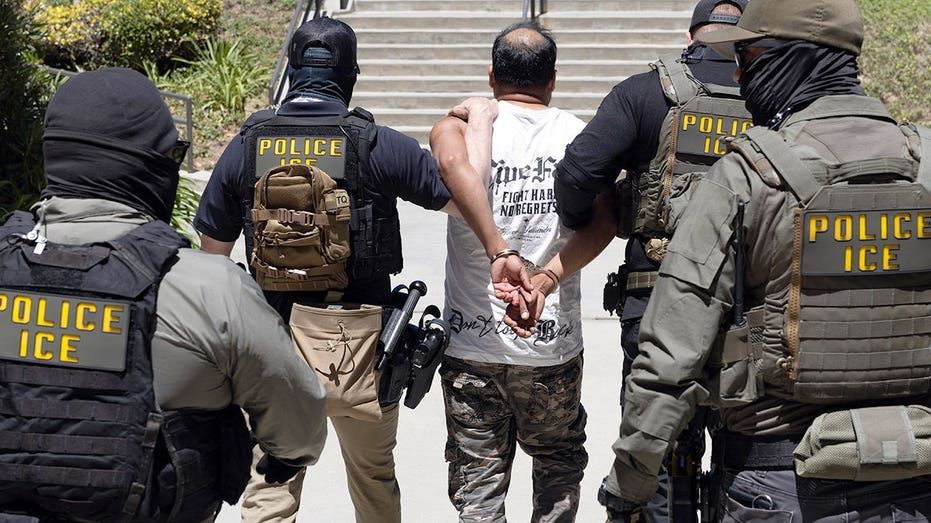
ICE crackdown divides swing state candidates as GOP nominee vows to mandate sheriff cooperation
Read full story at Fox News →Wisconsin has become ground zero for a dormant fight over who controls local jails—and it's suddenly urgent again. Republican Tom Tiffany, a U.S. representative running statewide, committed to legislation that would force county sheriffs to comply with ICE detainers, the administrative requests that ask local law enforcement to hold individuals past their release date for federal deportation processing. Democrat David Crowley, Milwaukee's former alderman and current gubernatorial candidate, has moved in the opposite direction: he's backing restrictions on ICE access to county facilities altogether. Both positions are unambiguous. This isn't rhetorical posturing. Tiffany's mandate would strip sheriffs of discretion; Crowley's restrictions would eliminate it in the other direction. Wisconsin counties currently operate under no statewide requirement either way, which is precisely why this has become a wedge issue in a state Biden won by 21,000 votes in 2020.
The mechanics matter here because they determine real outcomes. When ICE issues a detainer, it's not a warrant—it's a request, and sheriffs can refuse it without legal consequence. Dane County (Madison) and Milwaukee County have both adopted policies of non-compliance with detainers absent a judicial warrant, citing liability concerns and jail crowding. Tiffany's proposal would reverse that calculus by making compliance federal law, effectively converting sheriffs from decision-makers into enforcement arms. Crowley's position would formalize what progressive counties already do and extend it statewide. For immigrants in Wisconsin—roughly 400,000 foreign-born residents, concentrated in urban areas—this determines whether a local arrest for a minor offense becomes a deportation pipeline. For sheriffs, it determines whether they answer to constituents or federal mandate. For both campaigns, it's a test of which coalition controls Wisconsin's future.
The parallel is immediate and instructive: sanctuary city policies of the 2017-2021 era played out identically at the local level, with sheriffs and police chiefs in Democratic areas refusing ICE cooperation while Republicans demanded federal enforcement. What's different now is that someone is trying to centralize it into state law, not just local policy. Trump's first term saw similar attempts at federal mandates requiring cooperation, but they stalled partly because of court challenges and sheriff resistance across red states too—rural sheriffs in particular objected to being deputized as immigration agents. Tiffany's proposal would avoid some of those pitfalls by operating through state law rather than federal coercion, but it would face the same practical resistance: sheriffs who don't want to comply. Wisconsin sheriffs' associations haven't endorsed either position, which tells you something about how divided the profession remains.
The conservative argument here is straightforward: if someone is in a U.S. jail and ICE wants them, local taxpayers shouldn't subsidize their release. Crowley's position amounts to local governments becoming deportation prevention services, absorbing the costs and liability while federal law is ignored on their watch. Tiffany's framing: sheriffs can cooperate with ICE or they can explain to voters why they're using county resources to protect people subject to deportation orders. It's not a fringe position—a majority of Republican-led counties already honor detainers voluntarily. But the force of law is different from voluntary cooperation, and Tiffany knows it. His mandate would eliminate the discretion that has allowed Democratic counties to opt out. That's the actual proposal, not cooperation but subordination.
Watch for the Wisconsin sheriffs' association to take a position before the general election. If they oppose Tiffany's mandate—which is plausible given sheriff independence traditions—it becomes a problem for him in rural areas where sheriffs have real political weight. Crowley faces his own exposure if he's asked to endorse ICE releases of individuals with serious criminal records, a scenario that gets weaponized easily. The next concrete step is whether either candidate files actual legislation or whether this remains campaign positioning. Tiffany controls a House seat, so a state-level bill would require a Democratic legislature to take it up—unlikely. That means this stays rhetorical unless Republicans sweep state races. Then it becomes law