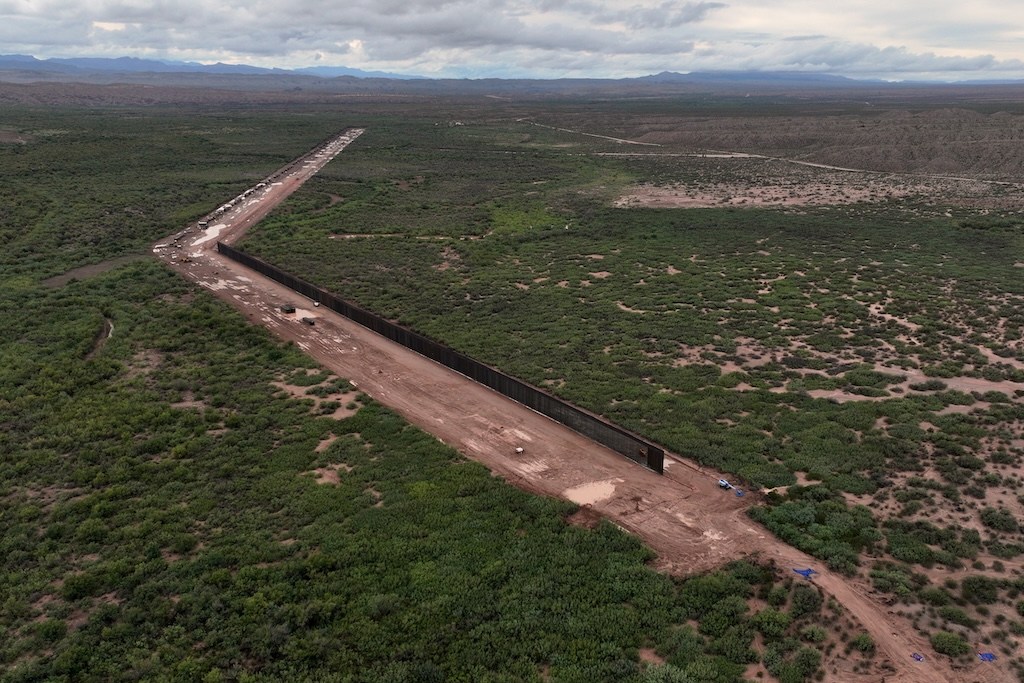
Trump administration asks Supreme Court to lift block on Big Bend border wall construction
Read full story at Washington Examiner →The Trump administration's emergency petition to the Supreme Court centers on a concrete dispute: whether construction can proceed on approximately 30 miles of barrier in Big Bend National Park along the Texas-Mexico border. In December 2024, a federal district judge issued an injunction blocking the work after environmental groups challenged the project, arguing it violates the National Environmental Policy Act and the Endangered Species Act. The administration, through Solicitor General D. John Sauer, is now asking the Court to immediately suspend that injunction—a procedural move that bypasses the normal appellate process and goes straight to the nine justices. The Big Bend section is part of Trump's broader border wall expansion, with the administration arguing it's essential infrastructure for national security and immigration enforcement.
The specific environmental claims matter here. Big Bend sits in a remote region containing endangered species like the ocelot and aplomado falcon, plus sensitive karst topography—cave systems that can collapse if disturbed. Environmental plaintiffs argue the government rushed through environmental reviews and failed to adequately study the wall's impact on water resources and wildlife corridors. The Trump administration contends these objections are delaying tactics and that NEPA reviews were completed properly. This isn't abstract bureaucracy: the lower court's injunction effectively froze a construction project the administration views as a priority, preventing contractors from proceeding on a section where work was set to accelerate.
The political stakes cut sharply. For Trump and Republicans, border wall construction is both a core campaign promise and a test of executive authority—proving the administration can actually implement its stated immigration agenda despite legal challenges. For environmental and immigration reform groups, Big Bend represents a line. Unlike urban or agricultural areas where walls already exist, this is wilderness within a national park, and blocking construction here establishes a precedent that protected land can resist federal overreach. The injunction itself is temporary; the real outcome will depend on whether courts ultimately uphold the environmental claims on the merits, but the Supreme Court's decision on the emergency petition signals how the justices view the government's case.
The conservative argument here is direct: environmental groups are weaponizing procedural requirements to block legitimate border security infrastructure. The Trump view holds that NEPA reviews were completed, that the process is being stretched artificially, and that national security at the southern border shouldn't be hostage to lawsuits over rock formations and animal habitats. Critics of the lower court's injunction note that judges routinely hesitate to block military or national security projects on the theory that courts lack expertise to second-guess such decisions—yet here a single district judge has done precisely that. The administration has a point: the same legal framework has historically been used to defer to government agencies on security matters. Whether the current Supreme Court sees it that way remains the actual question.
Watch for the Supreme Court's response within the next 7-10 days. The justices can grant the emergency petition (lifting the injunction immediately), deny it (leaving the lower court's block in place), or issue a narrower order modifying the injunction's scope. A grant would vindicate the administration's position and allow construction to resume; a denial would signal the Court isn't willing to second-guess the district judge's preliminary injunction at this stage. The underlying environmental case will still proceed in the lower courts, but the Supreme Court's emergency ruling will determine whether construction happens while that litigation continues.