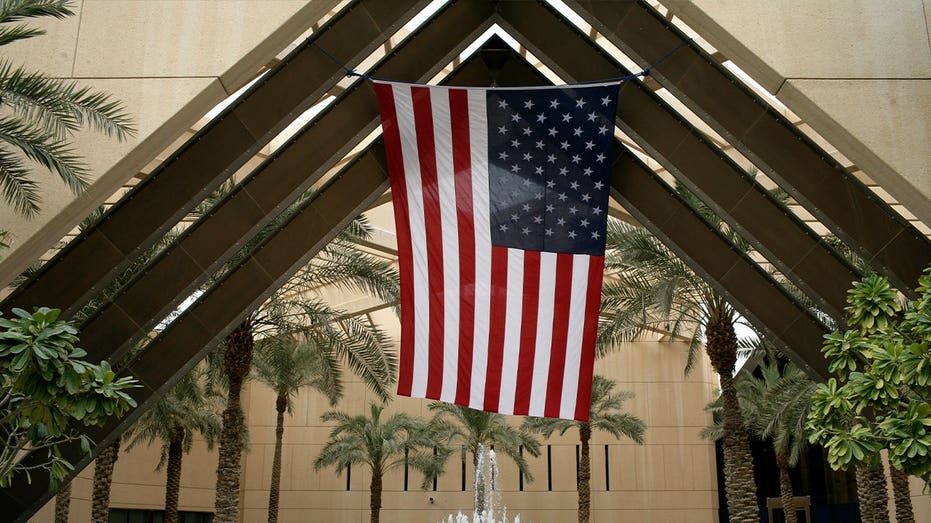
US pulls personnel from Saudi Arabia as kingdom comes under Houthi fire
Read full story at Fox News →The U.S. is reducing its military footprint at Prince Sultan Air Base near Riyadh after a series of drone and missile strikes from Yemen's Houthi rebels have intensified over the past six months. The Iranian-backed militia has launched at least 11 significant attacks on Saudi infrastructure since October 2023, including hits on Aramco facilities, desalination plants, and military installations. This isn't abstract terrorism—these are strikes on the infrastructure undergirding a $2 trillion economy and a crucial U.S. ally. The personnel pullback signals that even America's most strategically important Middle Eastern base isn't secure enough to maintain full staffing, a humbling admission after 30 years of continuous presence.
What makes this moment acute: the Saudis have asked Washington for additional air defense systems, specifically Patriot interceptors and THAAD batteries, because their existing systems are being overwhelmed. The Kingdom has already spent roughly $15 billion annually on air defense in recent years, yet the Houthis—operating from caves and hidden launch sites in one of the world's poorest countries—keep getting through. For the U.S., the calculation is brutal: either commit more military hardware and personnel to protect Saudi oil infrastructure (which indirectly props up global energy prices), or allow a proxy force armed by Iran to demonstrate that American-backed regional powers can't defend themselves. The Trump administration is reportedly considering direct strikes on Houthi command centers and production facilities in Yemen.
The precedent here is the 1973 Yom Kippur War and its aftermath—when Arab nations used oil embargoes as a weapon after military defeat. The current Houthi campaign is different in mechanism but similar in intent: disrupting energy supply to bend U.S. policy. The Houthis have explicitly tied their attacks to the Gaza conflict, framing their strikes as retaliation for American support of Israel. If the campaign succeeds in forcing a U.S. military escalation in Yemen or destabilizing Saudi energy production, it demonstrates that asymmetric warfare can extract geopolitical concessions from superpowers without conventional military capability.
The populist read: this is what happens when the U.S. commits to being the world's policeman without clearly defining when that job ends. We've had military presence in Saudi Arabia for three decades, we've intervened in Yemen twice, and we've poured weapons into the region faster than local militaries can deploy them. Now we're reducing personnel because we can't protect them—which is either an argument for getting out entirely or an argument that we haven't deployed enough force yet. Either way, it's a failure of strategic clarity. The Houthis are testing American resolve, and they're winning the test.
The immediate focal point: Trump has to decide whether to authorize strikes on Houthi targets in Yemen before his administration takes office or immediately after inauguration. That decision will determine whether this remains a regional air defense crisis or escalates into a direct U.S.-Houthi conflict, with all the second- and third-order consequences that carries for broader Middle East stability, oil prices, and American commitments elsewhere. The Saudis will push for action. Iran will calibrate its response based on what the U.S. does. That decision could reshape the region's trajectory for years.