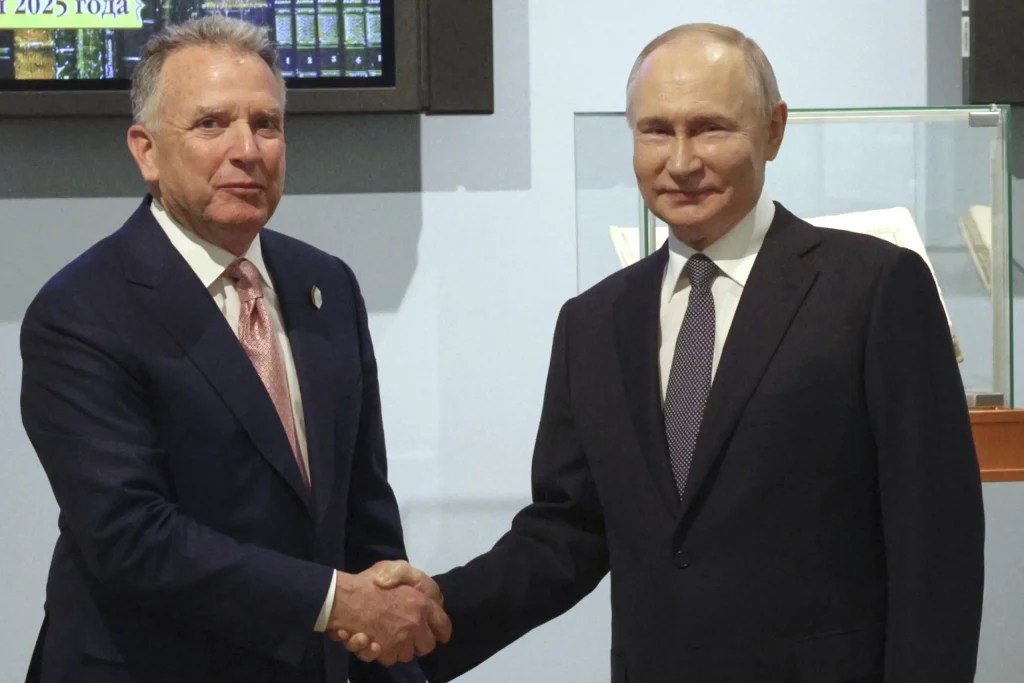
Witkoff praises Putin as a humanitarian — to his shame and ours
Read full story at Washington Examiner →Steve Witkoff, Trump's special envoy for Middle East negotiations, traveled to St. Petersburg this week to meet with Vladimir Putin as part of what the White House framed as discussions on Ukraine ceasefire terms. During the meeting, Witkoff described Putin as a "humanitarian," a characterization so divorced from documented reality that it demands examination of what exactly the Trump administration is signaling about its negotiating posture—and its values. Witkoff is a longtime Trump confidant and real estate developer with no diplomatic background who was appointed special envoy in November 2024. His presence in Russia, rather than a career diplomat's, suggests Trump is personally invested in these talks and potentially willing to reshape how the U.S. describes its adversaries.
The specific stakes here are the terms on which any Ukraine settlement might occur. If the Trump administration's chief negotiator is already rebranding Putin as a humanitarian in public remarks, it suggests either remarkable naivety about how such language undermines U.S. leverage, or a deliberate softening of rhetoric to justify major concessions to Russia. Putin has ordered the systematic destruction of Ukrainian cities, the deportation of hundreds of thousands of civilians including children, and the use of cluster munitions and chemical weapons against civilian populations—documented by international observers. Describing him as humanitarian while negotiating over Ukraine's future essentially pre-admits that American moral objections to his conduct won't constrain the deal being struck.
The conservative argument for engagement with Putin is straightforward: the U.S. cannot afford indefinite involvement in Ukraine, Europe should bear primary responsibility for its own security, and Trump was elected on a platform of ending foreign wars. That case has intellectual coherence. But it requires not pretending the man you're negotiating with is something he isn't. Calling Putin humanitarian doesn't make negotiations more effective—it makes them less so, because it signals you've abandoned the factual basis for your demands. It also domestically signals to the base that the administration will say whatever's convenient, which corrodes the credibility you need for any difficult negotiation.
What comes next is a concrete test: within weeks, either a Ukraine settlement framework will emerge from these talks, or they'll stall. If a deal materializes, the language Witkoff used will be remembered as an early indicator that the administration was willing to trade rhetorical recognition of Putin's "good faith" for Russian concessions. Congress will then face pressure to approve any settlement, and Witkoff's framing—humanitarian Putin as a negotiating partner—will be cited by administration officials as evidence of a new era of U.S.-Russia relations. Watch whether the State Department or other officials walk back Witkoff's language, or whether it becomes the official framework. That tells you everything about whether this administration still views Putin as an adversary or a potential partner.