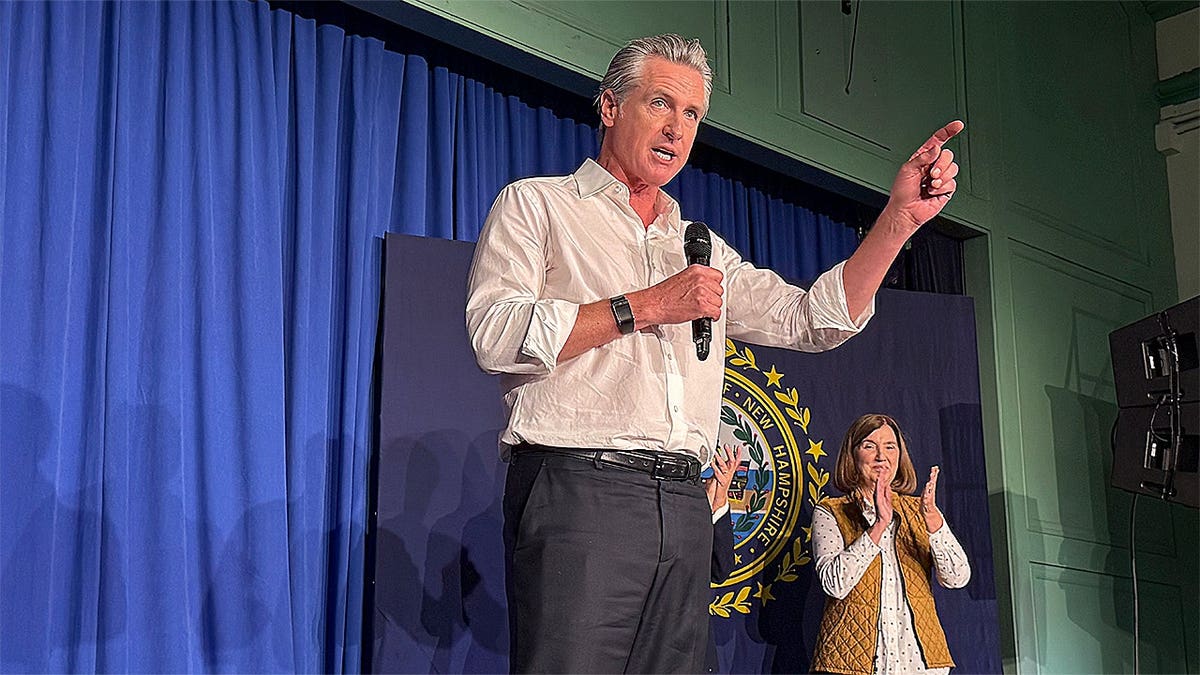
Gavin Newsom’s legislative minions just got a lesson in constitutional supremacy
Read full story at Fox News Opinion →California spent years constructing what it believed was an impenetrable legal wall between state police and federal immigration enforcement. The centerpiece was SB 54, the so-called "Sanctuary State" law passed in 2017, which prohibited state and local law enforcement from cooperating with Immigration and Customs Enforcement agents, sharing custody information, or allowing ICE to use state detention facilities. Then came the "No Vigilantes Act" in 2021—ostensibly designed to protect immigrants from private citizens, but written with surgical precision to restrict ICE agents' ability to make arrests in sensitive locations like schools and courthouses without state permission. The law required federal agents to obtain written approval from California's attorney general or local prosecutors before entering these sites. It was regulation wrapped in humanitarian language, and it lasted exactly as long as it took to reach the Ninth Circuit Court of Appeals.
On November 19, a three-judge panel of the notoriously liberal Ninth Circuit unanimously struck the law down. Unanimously. That's not a close call or a narrow ruling—it's judges across the ideological spectrum agreeing that California had overstepped. The court invoked the Supremacy Clause, the constitutional provision that makes federal law the supreme law of the land when states try to interfere with it. The specific holding was blunt: California cannot condition or restrict how federal immigration agents do their jobs. If ICE wants to arrest someone at a school, ICE can arrest them at a school. If the state wants to sue afterward, fine. But it cannot be a prior restraint on federal action.
What's at stake is California's entire enforcement strategy against federal immigration authorities. These laws were designed to make California a de facto sanctuary state by making it administratively impossible for ICE to operate efficiently—not by directly defying federal law, but by creating layers of obstruction. For immigrants without legal status, particularly those in the undocumented population that California has oriented much of its recent policy around protecting, this ruling opens a door. Schools, courthouses, and hospitals will no longer have the state's legal shield. For Newsom's administration, it's a humbling loss: years of legislative work, backed by Democratic supermajorities, erased by constitutional principle. For ICE, it's validation that federal authority over immigration enforcement cannot be checkmated by state procedure.
The historical parallel is instructive. In the 1950s, Southern states attempted to nullify federal desegregation orders through a doctrine called "interposition"—the idea that states could position themselves between federal authority and their citizens. It failed because the Constitution doesn't permit it. What California attempted with SB 54 and the "No Vigilantes Act" was a softer version of the same maneuver: not outright defiance, but strategic obstruction dressed in permissible language. The Ninth Circuit's unanimous decision treats it the same way the Supreme Court treated interposition—as incompatible with the Supremacy Clause, regardless of motive.
The conservative read is straightforward: Newsom ran for higher office promising to handcuff federal immigration enforcement within California's borders. He passed laws explicitly designed to obstruct federal agents. The courts told him he doesn't have that power. This is how constitutional government works. States don't get to nullify federal law through procedural trickery, even when done with progressive intentions. The Ninth Circuit's unanimity suggests that even judges sympathetic to California's policy goals recognized that allowing states to condition federal law enforcement would be constitutionally catastrophic. If California can require ICE to get written permission slips from the AG, what stops Texas from requiring federal environmental inspectors to get permission from the governor? The foundation doesn't hold up.
The immediate question is whether California will appeal to the Supreme Court. Newsom's office has not yet signaled its next move, but a petition for certiorari could land on the Supreme Court docket by mid-2025. If the Court takes the case, it would be ruling on the outer limits of state power to restrict federal agents' operations—a question with implications far beyond immigration. More concretely, watch the California legislature. Facing a constitutional dead-end, will it attempt to