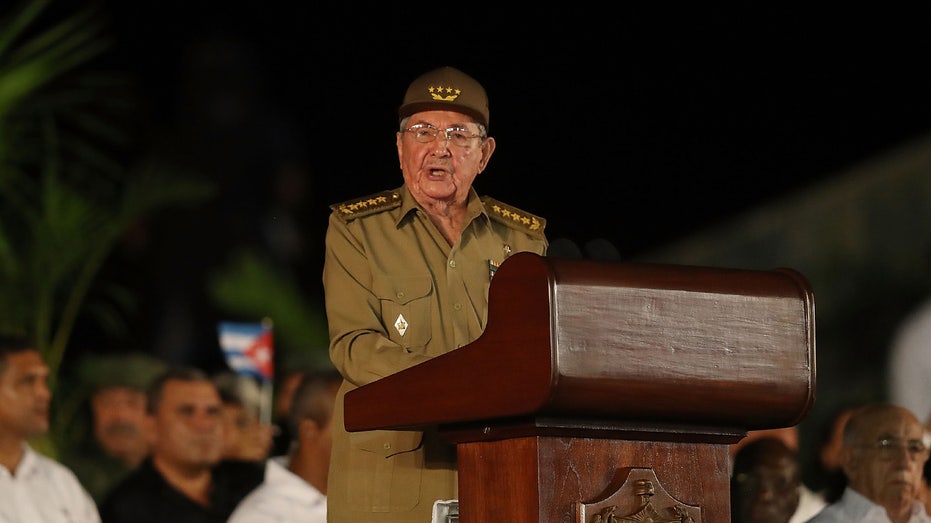
Cuban American lawmakers hail Raúl Castro arrest warrant, vow to keep fighting for Cuba’s freedom
Read full story at Fox News →A Florida judge has issued an arrest warrant for Raúl Castro stemming from the February 12, 1996 shootdown of two Cessna aircraft operated by the Miami-based group Brothers to the Rescue. The operation, carried out by Cuban military jets, killed four men—three American citizens and one permanent resident. The warrant charges Castro with conspiracy to commit murder and violating the Neutrality Act. Castro, who ruled Cuba alongside his brother Fidel from 1959 until stepping down in 2008 and formally relinquishing power in 2011, has never faced criminal prosecution in the U.S., despite decades of exile community pressure. He is now 93 years old and living in Havana. The warrant carries no practical mechanism for enforcement given the absence of U.S.-Cuba extradition arrangements, but it represents the first time a sitting or former Cuban leader has been formally charged in American court for acts committed during the regime's rule.
The families of the four men killed—Armando Alejandre Jr., Carlos Costa, Mario de la Peña, and David Haissaguerre—have pursued justice continuously for nearly three decades. Brothers to the Rescue was conducting search-and-rescue operations for Cuban rafters attempting to reach Florida when the aircraft were intercepted. Declassified government documents have confirmed that Castro's government authorized the shootdown, knowing the planes were unarmed and operated by American civilians. For the exiled Cuban American community in South Florida, particularly in Miami-Dade County, the warrant represents a long-delayed acknowledgment that this was not a military engagement but a state-sponsored killing. The survivors' families gain no immediate redress—the warrant is largely symbolic—but the legal record now formally documents state responsibility.
Conservative Cuban American lawmakers seized on the warrant as vindication of their decades-long argument that the Castro regime committed unpunished crimes against Americans and that normalization with Cuba amounts to capitulation. Rep. Mario Díaz-Balart (R-FL) and Senator Marco Rubio (R-FL), both Cuban Americans with family history tied to the revolution, had pushed for prosecution and have used the 1996 shootdown as a centerpiece in their opposition to any easing of sanctions or diplomatic engagement. Their argument is straightforward: a hostile state murdered American citizens on the open ocean and faced no consequences under multiple administrations, both Republican and Democratic. The warrant, to them, represents the first serious U.S. government acknowledgment of this crime. They view it as a corrective to what they characterize as decades of diplomatic cowardice.
The episode echoes the 1976 Cubana de Aviación Flight 455 bombing, in which a civilian aircraft was destroyed over Barbados, killing 73 people including the entire Cuban Olympic fencing team. That attack was traced to operatives connected to Cuba's anti-Castro exile movement, and the accused bombers faced trial—though one, Luis Posada Carriles, evaded U.S. extradition attempts and lived under CIA protection for years. The parallel cuts both directions: it demonstrates that Cold War-era political violence in the Caribbean often went unpunished regardless of which side committed it, and it underscores the Cuban American community's long-standing grievance that crimes by the Castro government received even less accountability than those by exile groups.
What follows is procedurally murky. The arrest warrant is valid in Florida state and federal courts, but Raúl Castro is unlikely to voluntarily surrender or travel to U.S. territory. Cuba's government will reject any extradition request as a violation of sovereignty. The warrant does, however, create legal exposure if Castro were ever to die and his estate or assets faced claims from the victims' families, and it establishes a formal court record of criminal conspiracy that can form the basis of ongoing civil litigation. Watch for whether the Biden or next administration files a formal extradition request with Cuba—a symbolic but diplomatically significant move—or whether this warrant remains a record without practical enforcement. The families' lawyers will likely pursue asset seizures under federal law; Cuba holds certain frozen assets in U.S. banks dating to pre-1959 claims,