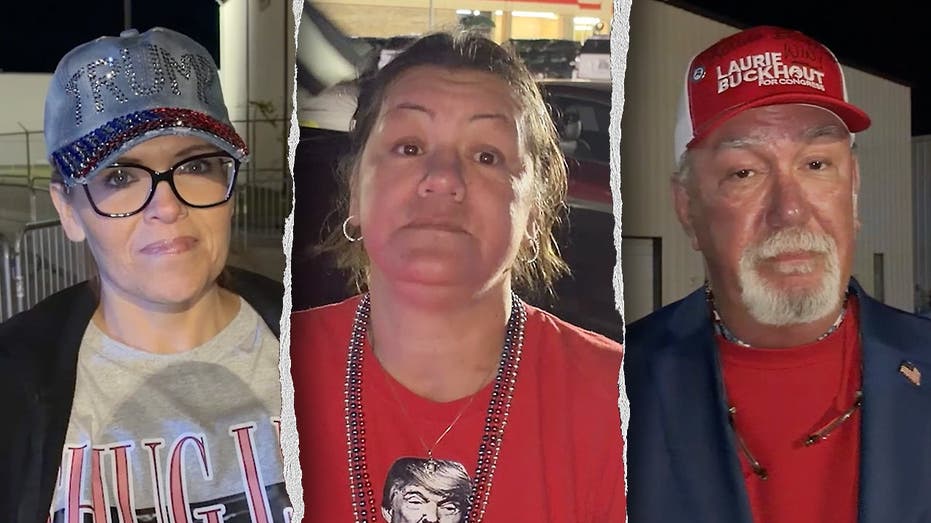
Trump supporters confronted with painful gas prices deliver striking response: ‘I'll take that any day’
Read full story at Fox News →# Why This Matters
The conversation unfolding at Trump rallies reveals a genuine split in how Americans weigh competing economic anxieties. Attendees in North Carolina—the state Trump won by 3.3 points in 2020—are explicitly trading off immediate personal cost against geopolitical risk. Gas prices have risen roughly 50 cents per gallon since Trump left office, meaning a driver filling up twice weekly now pays an extra $40-50 monthly. Yet the rally-goers quoted in this report aren't denying the hit; they're openly accepting it as necessary. This isn't dismissal of economic pain. It's prioritization, and it matters because it suggests Trump's base may hold different risk calculus than the political class assumes.
The mechanics here are specific. These supporters aren't being polled in a vacuum—they're at campaign events where they've chosen to show up, waited in lines, and volunteered their view to cameras. They're making a statement about Iran policy directly, tying their willingness to tolerate higher energy costs to preventing Tehran from acquiring nuclear capability. Under Trump's first term, he withdrew from the Iran nuclear deal in May 2018, reimposed sanctions, and authorized the killing of Iranian General Qasem Soleimani in January 2020. Those moves contributed to tensions that raised oil prices then as well. The current framing suggests supporters have internalized a specific foreign policy argument: that confronting Iran now prevents a costlier conflict—and higher prices—later.
This echoes the 2003-2008 period when Iraq War supporters cited security against terrorism as worth the economic cost, including higher gas prices driven partly by Middle East instability. That analogy cuts both directions—the Iraq War eventually lost public support as costs mounted without clear strategic victory. But the parallel shows this pattern of trading immediate economic pain for claimed long-term security isn't new to Trump politics or the right; it's a recurring framework.
The conservative read here is direct: elite institutions have spent years warning about Iranian nuclear development without acting decisively. Trump acted. If that action raises gas prices but prevents a nuclear-armed Iran from destabilizing the region or threatening U.S. interests, it's the correct trade. Critics who blame Trump for gas prices while opposing confrontation with Iran are having it both ways—they want neither the action nor its consequences, but offer no alternative that actually stops Tehran's program. From this view, these rally attendees understand something the media doesn't: sometimes security costs money, and that's not a bug, it's the price of not losing.
What matters next is whether this sentiment holds as a voting bloc if prices stay elevated. Gas prices influence elections more directly than almost any other metric—they touch every household weekly. If prices fall, this framework disappears from rallies. If they rise further, Trump will need these voters to maintain this specific argument (Iran as justification) rather than pivoting to blame Biden or OPEC. The next test comes at the pump, not the podium. Watch whether Trump's messaging stays tied to Iran policy specifically or generalizes into complaints about energy policy broadly. The first keeps these supporters locked into his foreign policy rationale. The second signals even his base is losing patience.