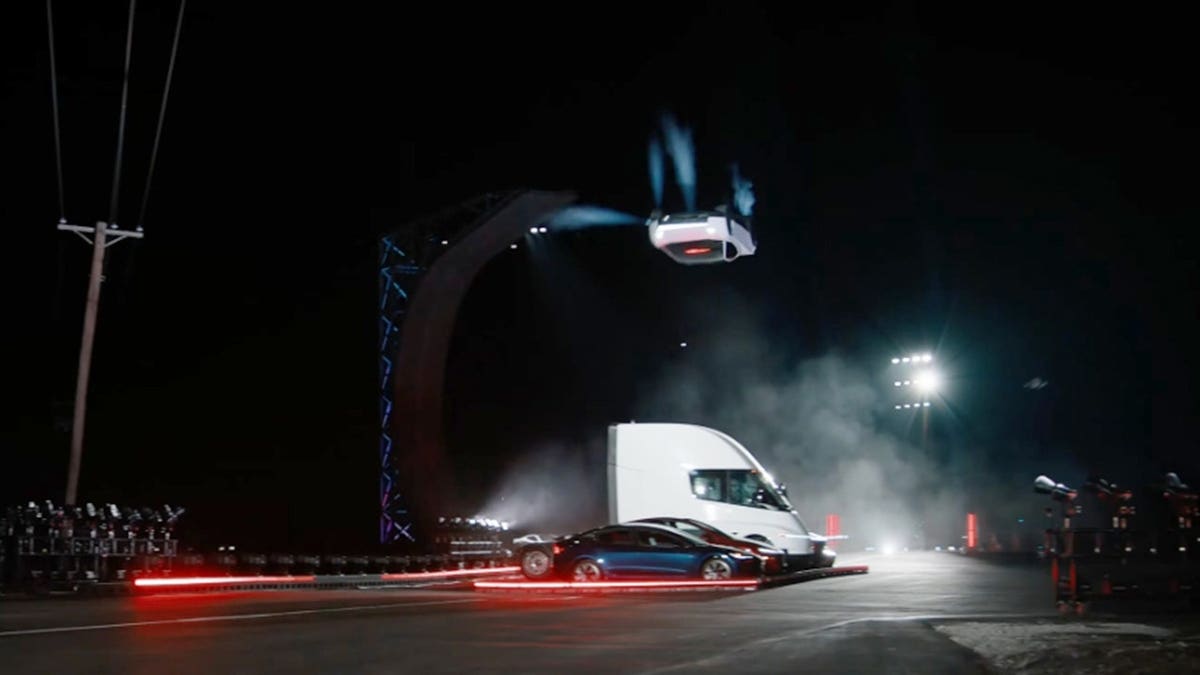
Want flying cars? America needs thousands more Elon Musks and less red tape
Read full story at Fox News Opinion →The Tesla Roadster "hover" video that circulated last week wasn't actually a flying car—it was a magnet-laden test platform levitating over a specially prepared track, a distinction that matters less than what it represents: the gap between what's technically possible and what gets built. That gap, according to the Fox News framing, isn't primarily an engineering problem. It's a regulatory one. The argument hinges on a specific claim: that the U.S. needs radically fewer constraints on experimental vehicle development if it wants to compete with international competitors in next-generation transportation, autonomous systems, and aerospace innovation.
The concrete problem starts with timeline and numbers. New vehicle certifications through the National Highway Traffic Safety Administration currently take 3-7 years and cost $50-150 million before a single commercial unit ships. Electric vertical takeoff aircraft (eVTOL companies like Joby, Lilium, and Archer) have been in FAA approval limbo since 2018, with no certification standard finalized yet. Meanwhile, China's EHang completed its first autonomous passenger flight in 2021 and is already offering aerial taxi services in Guangzhou. The regulatory cost isn't abstract—it's the difference between whether a garage operation can become a company or whether only well-capitalized firms like Tesla or established aerospace contractors can afford the entry fee.
The historical parallel is worth noting: the early aviation industry faced similar regulatory strangling in the 1920s-30s, when pilot licensing, aircraft certification, and airway rules nearly killed American commercial aviation before a 1938 Civil Aeronautics Act actually streamlined the process. The U.S. went from near-irrelevance to dominance in aviation within a decade after regulation clarified rather than blocked pathways. The claim here is that we're repeating the mistake in a new domain—writing rules for technologies that don't yet exist, which inevitably freezes those technologies in existing categories.
The conservative read is straightforward: regulatory agencies aren't nimble. A bureaucrat at NHTSA cannot legally approve a vehicle type the statute doesn't contemplate; they can only apply rules written for conventional cars. This doesn't require malice, just institutional inertia. A startup with a working prototype of an autonomous delivery vehicle or a personal aircraft can't skip the rulebook—they have to wait 5-10 years for the rulebook to be rewritten, by which time their capital is exhausted and their engineers are gone. Musk can absorb that cost because Tesla had $13 billion in cash reserves last quarter. A founder with a better idea cannot. The solution isn't more money from Washington; it's fewer mandatory approval steps before prototype testing can begin.
What to watch: the FAA's expected release of its Special Airworthiness Certification for eVTOL aircraft, currently scheduled for Q3 2024. This will define whether companies can actually begin commercial operations or whether another multi-year extension becomes standard. Separately, NHTSA is developing a framework for autonomous vehicle testing that could either create safe exemptions for limited-scope trials or lock autonomous tech into outdated vehicle-class categories. Congress is also watching—there's bipartisan interest in a "regulatory sandbox" bill that would let companies test new vehicle types under limited conditions without full certification, a mechanism already used in fintech and biotech. The Tesla hover demo was marketing; the real product launch that matters is whether any startup can legally build and test the next thing without waiting for bureaucracy to catch up.