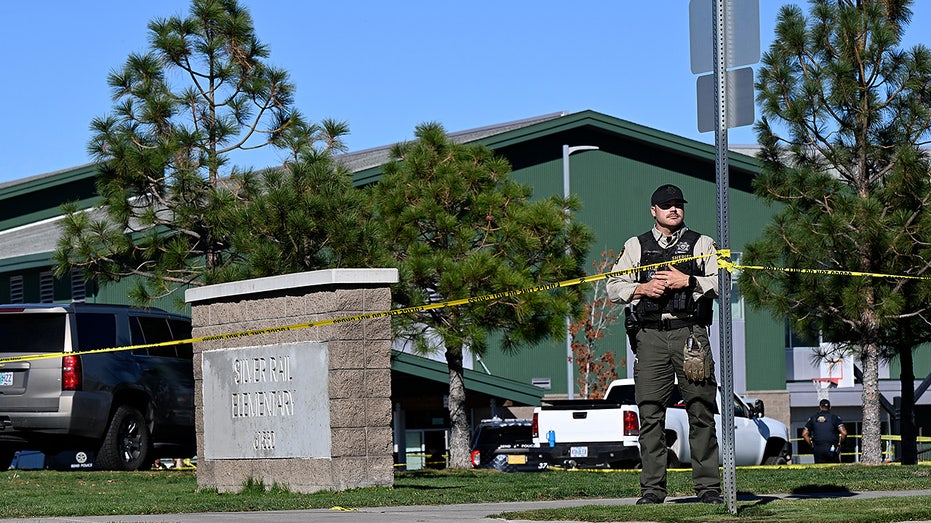
Democrats' latest gun-control push runs into inconvenient fact about how school killer was stopped
Read full story at Fox News →# Why This Matters
The Cascade High School shooting in Eugene, Oregon on May 24 left two people dead and five wounded—before an armed student in the parking lot engaged the shooter and forced him to retreat, potentially preventing a far larger massacre. The gunman, identified as 17-year-old Caleb Cano-Castruita, was carrying multiple weapons and ammunition magazines when the armed student fired, causing Cano-Castruita to abandon his rifle and flee. Police arrived within minutes and arrested him. The specific sequence matters because it directly contradicts the premise underlying most Democratic gun-control arguments: that armed civilians create chaos rather than stop threats.
This creates a messaging problem for advocates pushing new restrictions. The standard Democratic framework treats armed civilians as a liability—the core argument for universal background checks, magazine limits, and gun bans rests on reducing the total number of weapons in circulation. But when a high schooler with a firearm stops a shooting in progress, the political equation shifts. Democratic leaders can't easily argue that "no guns" is the solution when a gun demonstrably saved lives on this particular day. The shooter had already penetrated a gun-free school zone; the perimeter control advocates rely on had already failed.
The armed student wasn't acting as security or in any official capacity—he was simply present, trained enough to make a judgment call, and legally carrying. That distinction matters because it reveals the actual vulnerability being discussed: gun-free zones create defense gaps that ordinary armed citizens sometimes fill. This is functionally the argument the NRA and Republican gun-rights advocates have made for two decades. It's difficult to counter by pointing to other shootings stopped by police response, because police response doesn't contradict the logic—armed presence does, whether official or civilian.
The conservative position here is straightforward: if armed civilians can and do stop mass shootings, then policy should either enable more of them or at minimum stop restricting them. The armed student in Eugene did what security professionals are paid to do—he identified a threat and neutralized it. The question becomes why Democrats want to reduce the pool of people available to do that. From this angle, gun-free zones are security theater that work until they don't, and when they don't, the cost is paid in casualties. Restricting guns under the logic that "only trained professionals should have them" falls apart when an untrained high schooler outperforms the professionals.
Watch for how national Democratic leadership addresses this specific incident. There have already been efforts to downplay the armed student's role or redirect attention to "why he had a gun in a gun-free zone," but that framing admits the fundamental problem—gun-free zones don't actually exclude guns from determined actors, they exclude guns from people willing to follow rules. The political test will be whether any major Democratic candidate is willing to say plainly that the armed student was wrong to carry. If they hedge, they're conceding the premise.
The next concrete moment comes if this case reaches any legislative body or if similar incidents occur. The more armed civilians successfully stop shooters, the harder the political sell becomes for new restrictions based on the assumption that fewer guns equal fewer deaths. Legislative momentum for new gun control bills typically follows mass shootings; it stalls when the shooting is stopped by someone exercising the very rights being targeted for restriction.