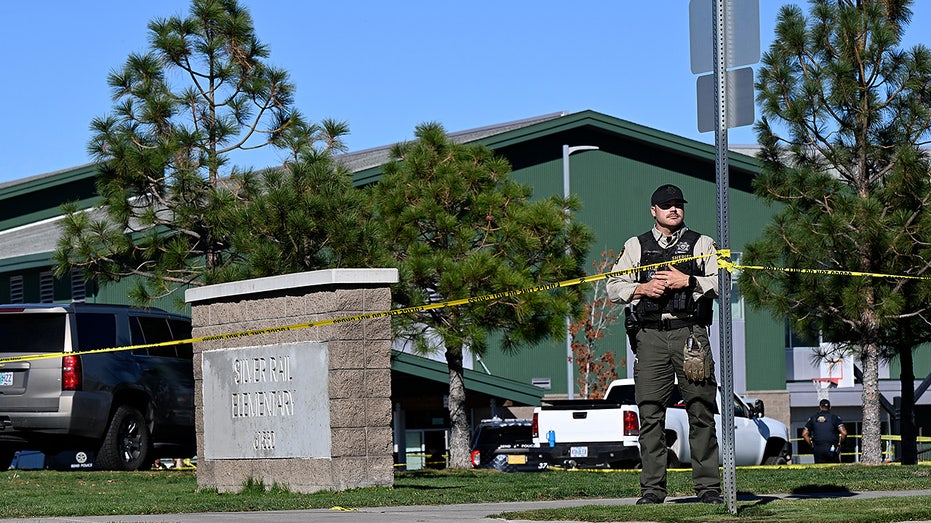
Democrats' latest gun-control push runs into inconvenient fact about how school killer was stopped
Read full story at Fox News →# Why This Matters
The Sprague High School shooting in Salem, Oregon on May 24 killed four students and a teacher before it ended—and here's the detail Democrats' gun control push has to reckon with: a school resource officer on campus engaged the shooter and pinned him down long enough for additional armed law enforcement to arrive and end the threat. This isn't speculation about what could have happened; it's the documented sequence of how this particular mass shooting was stopped. The 15-year-old shooter, Emilio Navaira-Norum, used a handgun he obtained illegally. He fired roughly 50 rounds inside the school. The armed presence of trained personnel with direct access to the shooter proved decisive in minutes—not in preventing the shooting, but in stopping its continuation.
The political collision here is specific: Oregon has some of the nation's strictest gun laws, including a waiting period, background check requirements, and regulations on magazine capacity. Sprague High itself was formally designated a gun-free zone. Yet none of those policies prevented an armed intruder from entering and killing five people. The shooter's weapon was obtained through illegal channels. What advocates now face is the uncomfortable data point that strict gun regulations can coexist with mass shootings, and that the stopping mechanism wasn't more regulation but an armed person already present.
Conservatives see this as validation of a core argument: gun-free zones create defenseless environments, and defensive armed presence works. The logic doesn't require eliminating all gun regulations—it simply notes that a school with an SRO and access to armed response had a shooting end faster than schools without those resources. Places like Parkland High School in 2018 (where the SRO remained outside during the shooting) and Uvalde, Texas in 2022 (where armed police delayed entering) showed the opposite: the absence of immediate armed response correlates with higher body counts. The Sprague case fits a pattern. Armed presence at the scene, ready to engage, stopped this shooter. No policy preventing gun ownership would have achieved the same result because the shooter already had an illegal weapon.
What's actually in play is a resource allocation question buried under rhetoric. The federal government hasn't funded comprehensive SRO placement in all schools. Oregon schools aren't uniformly equipped with armed personnel or rapid-response protocols. Yet when those resources appear—as they did at Sprague—the outcome measurably differs. The conservative position isn't "arm teachers" or "arm everyone." It's simpler: if you're going to make schools gun-free zones, you need immediate armed response capability inside those zones, not just outside or arriving later.
Watch for three things: First, whether Oregon Democratic leadership acknowledges the SRO's role or pivots to other talking points about "gun access" that don't address how this shooting ended. Second, the funding discussions in the next legislative session—will Oregon increase SRO placement statewide, or introduce new gun regulations? Third, whether national Democrats use this incident, and if so, how they handle the fact that their preferred policy solution (gun-free zones with no armed presence) failed and someone else's solution (armed responder on scene) succeeded.
The Sprague shooting becomes a test case for whether gun control advocacy can integrate inconvenient evidence into its framework, or whether it operates as a fixed ideology immune to counterfactual data. The five people who died weren't saved by regulation. They're dead. The shooting stopped because someone with a gun, already there, used it. That fact doesn't settle the entire gun debate—but Democrats claiming it doesn't matter are arguing against the observable reality of what ended this specific attack.