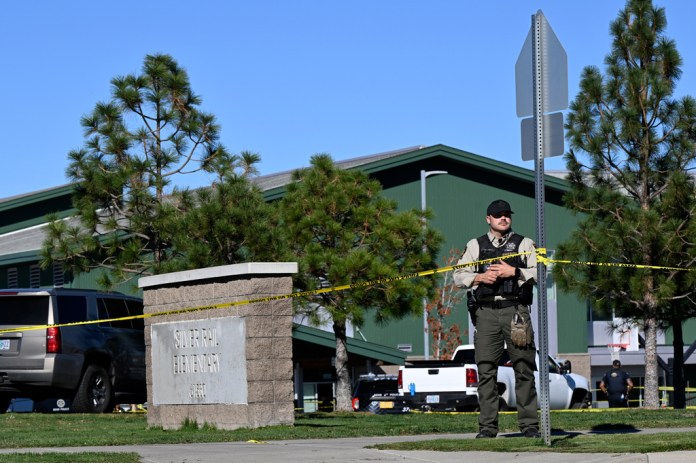
Four dead, including three children, in Oregon elementary school shooting
Read full story at Washington Examiner →# Why This Matters
A 16-year-old opened fire at Cascade Middle School in Bend, Oregon on Thursday, killing three elementary-aged children—ages 5, 8, and 11—and a teacher before being fatally shot by a community member who pursued him into the building. The shooter's identity and motive remain under investigation by Bend Police Chief Mike Krantz's department. Oregon has experienced mass shooting incidents before, but the involvement of an armed civilian who engaged an active shooter inside a school building raises immediate tactical and legal questions about armed response protocols that schools and law enforcement have debated for years.
The specific mechanics of how the shooting ended matter here. A community member—not a school resource officer, not a trained security guard—made a split-second decision to follow an active shooter into an occupied school building and fired the fatal shots. This isn't the standard active shooter narrative of police arrival and tactical response. It's a civilian intervention that worked but could have created additional casualties or armed confusion during law enforcement's response. The shooter was 16, old enough to acquire and operate a firearm but young enough that his access and motive will likely implicate parental custody or mental health circumstances that preceded the attack.
Conservatives will argue this is exactly why armed school staff and rapid civilian response matter more than the gun-free zone policies that have defined most American schools for decades. If it took a private citizen to stop this attack, the argument goes, then the problem isn't the availability of firearms—it's the vulnerability of schools that depend on police response times and lack immediate defensive capability. This cuts against proposals for further gun restrictions and toward proposals for armed school personnel and loosened liability rules for armed civilians. The counter to that will be immediate—that a 16-year-old shouldn't have had access to a firearm in the first place, and that the real policy failure is permitting a minor to obtain weapons.
What happened in Bend will reshape how school districts weigh armed response protocols. The community member's intervention will either become a model for rapid civilian action or a cautionary example of how armed response can spiral unpredictably. Law enforcement will need to release details on how they identified the shooter's intent beforehand—whether there were warning signs, threats reported, or other flags missed. The shooter's access to firearms will become the critical factual question: Did he own the gun? Steal it? Had anyone reported concerns about his mental state to authorities?
Watch for the motive statement from investigators, expected within days. That will clarify whether this was targeted violence, random, or tied to specific grievances at the school. Also watch whether Oregon lawmakers move on gun restrictions or school safety funding—the state already has a red flag law on the books, so the question is whether it was triggered and failed, or whether the shooter had no prior documented incidents. And monitor how the community member who fired the fatal shots is treated legally and civilly—whether they face charges, civil suits, or become a figure in the national armed-response debate.