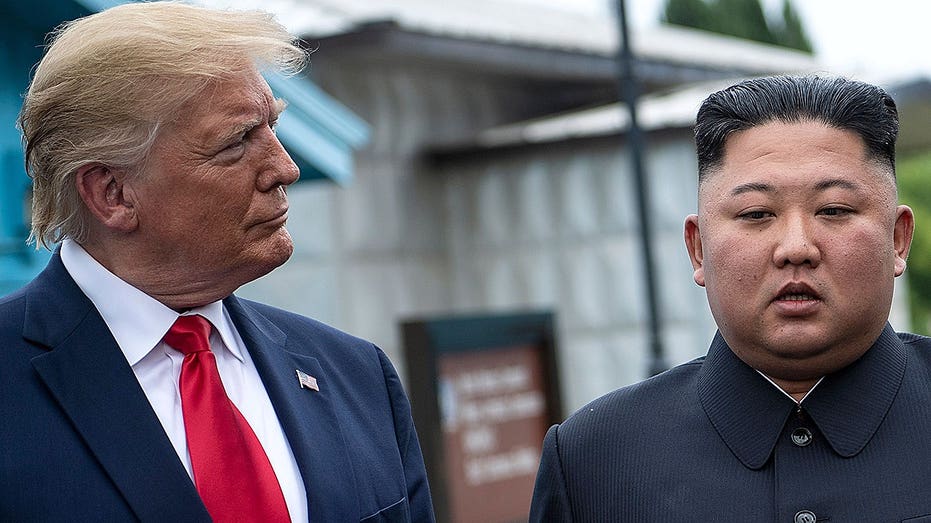
Trump plays nuclear poker with Kim Jong Un — but who holds the cards?
Read full story at Fox News →When Trump met Kim Jong Un in Singapore in 2018, the stated goal was clear: complete, verifiable, irreversible denuclearization of the Korean peninsula. Trump called it a historic breakthrough. What actually happened was far more limited—a vague commitment that produced no inspections, no weapons transfers, and no dismantling of North Korea's nuclear infrastructure. By the time those talks collapsed in Hanoi in 2019, North Korea had continued building warheads. Intelligence assessments now peg the arsenal at 50-70 operational nuclear weapons, up from roughly 30 when Trump first took office. The recent wrinkle isn't just Kim's weapons—it's his new alliance with Russia, formalized through the North Korea-Russia mutual defense treaty signed after Putin's 2023 visit to Pyongyang. That treaty effectively gives Kim a shield against the kind of military pressure that might have forced actual negotiations in the past.
The mechanics of what's changed matter here. North Korea's weapons aren't theoretical anymore; they've tested ICBMs capable of reaching the continental U.S., and Kim has demonstrated the miniaturization necessary to mount warheads on those missiles. More critically, Russia's invasion of Ukraine created an opening for Kim that never existed before. North Korean troops are now reportedly fighting alongside Russian forces in the war. In exchange, Russia provides advanced military technology, air defense systems, and most importantly: political cover. Any new U.S. military action against North Korea now risks direct escalation with a nuclear-armed Russia. That's a constraint Trump didn't face in 2018. The economic sanctions regime that once had teeth has been slowly hollowed out as Russia and China prop up North Korea's economy and work around restrictions. China's trade with North Korea rose 70% in 2023 alone.
What's actually at stake is whether the U.S. can maintain deterrence in East Asia without forcing a direct military confrontation. South Korea sits 30 miles from the DMZ with 10 million people in Seoul. Japan hosts 50,000 American troops and has its own nuclear power plants that would be at risk in any Korean conflict. If Trump returns to the negotiating table with Kim—which his rhetoric suggests he will—he's negotiating from a fundamentally weaker position than 2018. Kim now has more weapons, a military ally, and no reason to believe denuclearization is actually required. The best Trump might realistically achieve is a freeze on further weapons development or limitations on testing—the kind of modest outcome that would likely be portrayed as victory but represents acceptance that North Korea keeps its arsenal.
The Republican case for why this still makes sense is straightforward: accept reality. Denuclearization was always a fantasy. North Korea will never voluntarily give up the one thing that prevents regime change. Spending another four years pursuing that phantom goal wastes diplomatic energy and keeps the U.S. locked in a Cold War posture toward a country with a GDP smaller than Rhode Island. Trump's instinct to talk directly with Kim, without the State Department apparatus filtering the conversation, has at least the virtue of clarity—both sides understand they're negotiating over constraints and coexistence, not disarmament. The alternative, maintaining the current ambiguous state while sanctions slowly leak away and Russia strengthens North Korea's hand, arguably leaves the U.S. in a worse spot. From this view, a Trump deal that freezes the arsenal where it is beats the current trajectory of slow deterioration.
The immediate pressure point arrives if Trump actually schedules a summit with Kim. That would likely happen within the first year of his presidency. Before any meeting, watch whether the intelligence community officially revises its assessment of what's achievable—that framing sets the baseline for what counts as success. Also watch the reaction from Seoul and Tokyo. South Korea's government will be deeply nervous about any U.S.-North Korea bilateral deal that doesn't explicitly protect South Korean interests. If Trump negotiates without binding Seoul to the outcome, that fractures the alliance. The other concrete marker: Russia's performance in Ukraine. If the war stalls or Russia faces significant military setbacks, Kim's leverage drops and denuclearization actually becomes negotiable again. If Russia consolidates