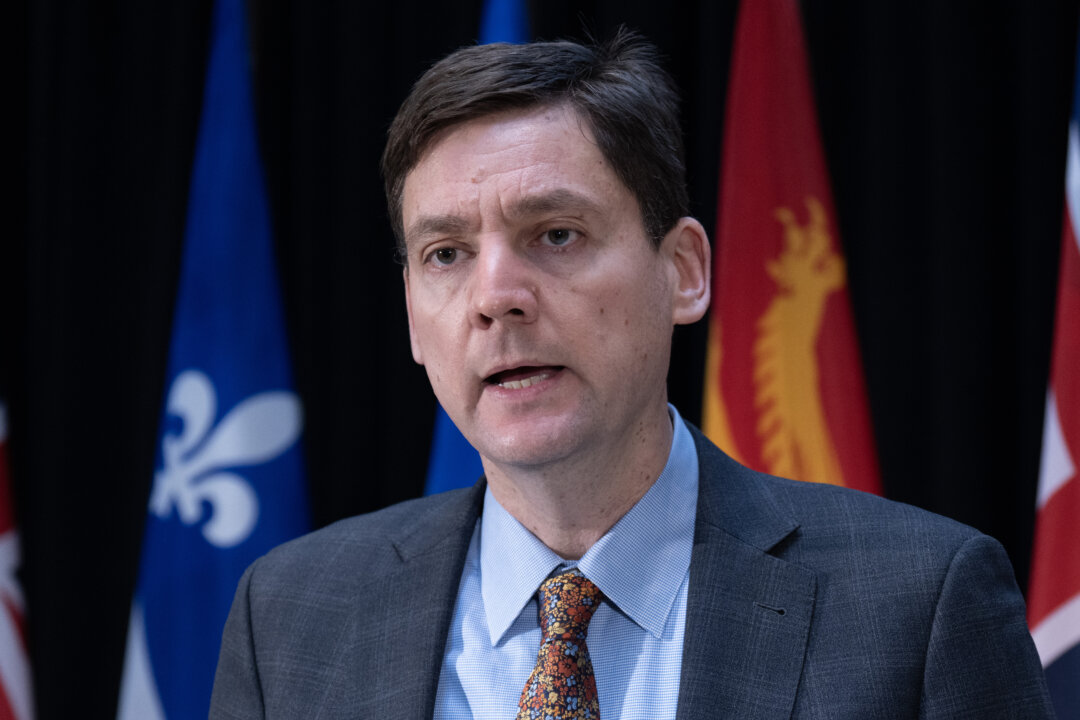
LIVE NOW: British Columbia Premier Eby Holds News Conference on US–Canada Trade Talks
Read full story at Epoch Times →David Eby is holding this conference in Ottawa while negotiations between Ottawa and Washington are in their most volatile phase since Trump's second term began. The Trump administration has threatened 25 percent tariffs on Canadian goods effective February 1, 2026—less than 72 hours from now—unless Canada concedes on border security demands, particularly around fentanyl interdiction and asylum processing. This isn't theoretical posturing; the deadline is a hard line, and Eby's province sits directly on the US border and accounts for roughly 15 percent of Canada's total exports to America. BC's softwood lumber, agricultural products, and natural gas make it uniquely exposed to whatever emerges from these talks.
Eby has positioned himself as the loudest provincial voice in the tariff fight, partly because BC has the most to lose and partly because he's been critical of Prime Minister Justin Trudeau's negotiating posture. In public statements over the past week, Eby has suggested that Ottawa is both too conciliatory and too slow—an awkward position that suggests he wants stronger leverage without saying exactly what that looks like. His intervention in what's technically a federal negotiation reflects real provincial anger: BC's forest industry alone exports $20 billion annually to the US, and a 25 percent tariff would delete roughly $5 billion in annual revenue almost instantly. That's not an abstraction for sawmill towns in Prince George or Port Alberni.
The specifics of what Canada is offering or resisting remain opaque. Trump's demand centers on processing asylum claims faster—potentially at the border itself—and demonstrating measurable progress on fentanyl seizures. Canada has pushed back on asylum processing partly because it involves sharing more migrant data with US authorities and partly because provincial immigration systems aren't structured for the speed Trump wants. Eby, whose government runs BC's provincial welfare system that migrants can access, has skin in this fight beyond just tariffs; he's also defending provincial autonomy against what would amount to US-directed immigration policy changes.
The conservative case here is straightforward: Canada has allowed its border to become a vulnerability that the US is now exploiting. Fentanyl deaths in the US have been driven partly by supply chains running through Canada, and asylum claims have created parallel labor markets that complicate both countries' immigration policy. From this angle, Trudeau negotiated from weakness—Canadian GDP depends on US trade far more than the reverse—and waited until the last 48 hours to get serious. Eby's willingness to break ranks with the federal government suggests even provincial Liberals recognize the negotiating position is untenable. The tariffs, in this reading, are the price Canada pays for letting border security become a political rather than a logistics question.
What to watch: The February 1 tariff deadline is absolute and non-negotiable according to Trump's Office of the US Trade Representative. If a deal emerges, it will announce before midnight EST on January 31. If tariffs go into effect, the first measurable impact hits within 48 hours as shipments already in transit cross the border at the new rate. Eby's statement today will either position BC as willing to accept federal concessions or signal that he's preparing his province for tariff impact—expect him to announce either support for Ottawa's negotiating team or a separate provincial contingency plan. A second provincial voice breaking with Trudeau would fundamentally shift the domestic political pressure and could force an accelerated capitulation.