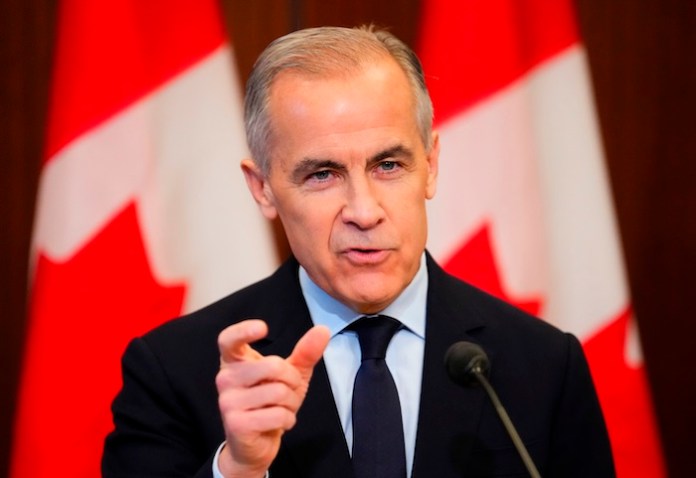
Carney outlines last-minute issues with US-Canada trade negotiations
Read full story at Washington Examiner →# Why This Matters
Mark Carney's public airing of specific U.S. negotiating demands represents a rare moment of transparency about what actually breaks trade talks—and it reveals the Trump administration's willingness to use final-stage pressure tactics that previous administrations avoided. Carney, who took office as Prime Minister in September 2024, pulled Canada from negotiations that had been underway since Trump's second term began, citing three concrete last-minute demands: changes to Canada's dairy tariffs, modifications to Buy American procurement rules that would benefit Canadian firms, and alterations to energy regulations in ways that would favor U.S. oil and gas interests. By naming these specifics publicly rather than allowing them to leak selectively, Carney is signaling that Ottawa believes it has public opinion on its side and doesn't fear political cost for refusing them.
The backdrop matters. The original USMCA (United States-Mexico-Canada Agreement) replaced NAFTA in 2020 and wasn't supposed to be renegotiated until 2026. But Trump, having campaigned on the idea that he got a bad deal, began pushing for revision immediately upon taking office in January 2025. Unlike the Obama administration's Trans-Pacific Partnership, which died in Congress over labor concerns, or the Bush administration's CAFTA, which faced genuine controversy, Trump's demand here caught Canada in a peculiar position: the country had actually benefited from USMCA's implementation, but Trump saw margin for extraction. The dairy issue specifically harks back to Trump's 2018 tariff war, when he targeted Canadian milk products; Carney's refusal suggests Canada won't simply reverse its protections after a few months of pressure.
Canada's economy depends on access to U.S. markets in ways Mexico's does not, making this negotiation asymmetrically weighted. Roughly 75 percent of Canadian exports go to the U.S., compared to about 15 percent of U.S. exports going to Canada. That imbalance usually gives Washington leverage. Yet Carney's decision to walk away—publicly and dramatically—suggests he concluded that accepting these demands would cause more domestic political damage than the cost of escalating trade tensions. Canadian dairy farmers, green energy advocates, and procurement-dependent companies all have electoral weight in Parliament, and Carney apparently calculated that losing them was worse than facing U.S. retaliation.
The conservative case is straightforward: Trump campaigned on renegotiating bad trade deals, and this is what that looks like in practice. The U.S. negotiated dairy concessions in USMCA that domestic producers never liked, Buy American rules that don't actually favor American workers over Canadian firms, and energy regulations that handicap U.S. oil production in favor of Canadian competitors. Carney's refusal to budge on these points, coupled with his decision to publicize them and frame them as aggressive U.S. overreach, is exactly the kind of deflection that past administrations accepted. From this angle, Trump's willingness to walk away from a "renegotiated" deal if Canada won't move is the only real leverage available—and it's one he should use.
The immediate terrain to watch is whether Trump follows through with threatened tariffs or allows a cooling-off period. Carney has not ruled out returning to talks, and there's significant pressure from U.S. business groups that rely on Canadian supply chains to avoid escalation. The next 30 days will likely determine whether this becomes a genuine trade war or a negotiating theater. If Trump imposes the 25 percent tariffs on Canadian goods he's threatened, the political math for both leaders changes dramatically—Carney would face domestic pressure to retaliate, and Trump would face corporate pushback heading into what could be a 2026 recession. Carney's move to public statements rather than back-channel diplomacy suggests he's banking on Trump backing down rather than following through, but that's the bet the market will test.