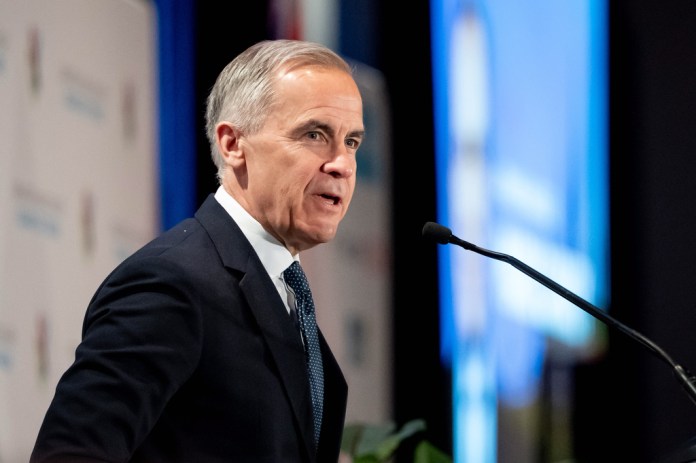
Carney says US ‘attacked’ Canada with tariffs and promises retaliation
Read full story at Washington Examiner →Mark Carney, Canada's incoming prime minister, is moving fast. He's not waiting for his official swearing-in to declare trade war—he's already naming the date (September 8) when Canadian tariffs hit American goods in response to U.S. tariffs on Canadian exports. The "dollar-for-dollar" language is precise: whatever the U.S. levies, Canada matches in kind. Carney frames this as reluctant self-defense, but the messaging is hardball. He's signaling to Washington that Canada won't absorb costs passively, and he's doing it publicly enough that backing down becomes politically impossible before he even takes office.
The context matters. Trade negotiations between the U.S. and Canada have collapsed. The U.S. imposed tariffs—the specific rates and goods aren't detailed in available reporting, but Carney's "dollar-for-dollar" commitment suggests meaningful exposure across Canadian industries. Agriculture, automotive, and energy sectors typically get hit first in these disputes. Canada exports roughly $400 billion in goods annually to the U.S., making it America's largest trading partner by volume. Tariffs at scale don't just hurt Canadian exporters; they ripple through North American supply chains, raising costs for American manufacturers who depend on Canadian inputs.
The stakes are concrete: American farmers, manufacturers, and consumers. Retaliatory tariffs on U.S. exports hit politically sensitive sectors—agriculture in swing states, potentially automotive parts, energy products. American manufacturers using Canadian materials face higher input costs, which either compress margins or get passed to consumers. For Carney personally, the stakes are immediate: he inherits a trade war on day one and needs to show strength to a domestic audience that's already skeptical of closer U.S. ties. Backing down would undermine his authority before he's begun.
This echoes the 2018-2019 Trump tariff cycle, though the dynamics are inverted. Then, Canada retaliated against U.S. steel and aluminum tariffs with its own levies on bourbon, orange juice, and Harley-Davidson motorcycles—specifically targeting Republican congressional districts. The playbook worked politically for Ottawa: it made the pain visible and localized. Carney's adopting the same strategy, but he's announcing it upfront rather than waiting for U.S. moves to land first. That's either confidence or desperation, depending on how negotiations actually stood.
The conservative argument is straightforward: Canada gets a sweetheart deal under any trade arrangement because of geographic leverage and political pressure. The U.S. subsidizes Canadian security through NATO spending and continental defense, then accepts tariff-free access to Canadian resources. When the U.S. finally uses tariffs as leverage—the only real negotiating tool it has—Canada cries foul and threatens retaliation against American workers. Carney's "reluctant" framing is theater. He knew this was coming, prepared this list of targets, and is now executing. The response should be equal pressure, not negotiating away the original tariff demand.
Watch September 8. That's the line in the sand Carney just drew. If U.S. tariffs remain in place and Canada follows through, real supply chain disruption begins. The question is whether either side blinks beforehand or whether this escalates into a broader North American trade standoff that includes Mexico. Also watch for sector-specific lobbying: American agricultural groups and manufacturers will pressure the White House to negotiate, which is the actual leverage point. Carney's betting the economic pain on the U.S. side forces concessions faster than domestic Canadian pressure forces his hand.