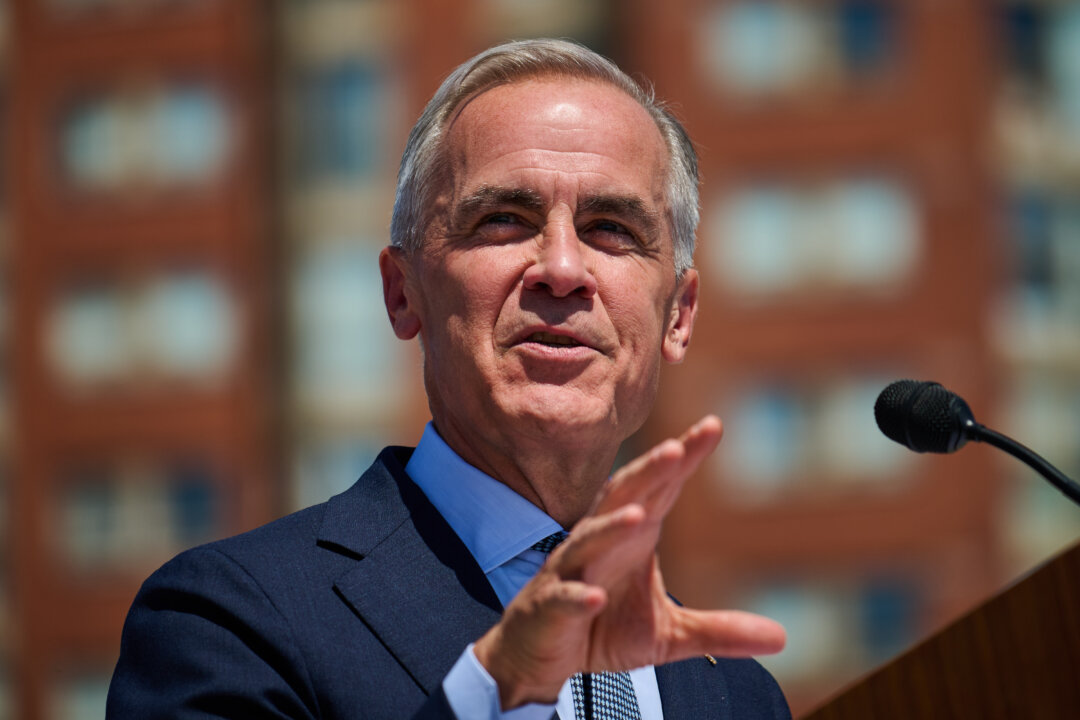
LIVE NOW: Canadian Prime Minister Speaks After US–Canada Trade Talks Fail to Reach Agreement
Read full story at Epoch Times →# Why This Matters
Canadian Prime Minister Mark Carney is addressing the country hours after trade negotiations with the United States collapsed without a deal, marking the first major breakdown in bilateral commerce talks since the two countries began renegotiating their trade framework in early 2026. The failure comes as Trump administration officials demanded a complete restructuring of automotive tariffs and agricultural quotas that Canada had signaled were non-negotiable, according to leaked negotiating documents obtained by Canadian media. Carney, who took office in October 2025 after winning a snap election on promises to "defend Canadian interests," now faces immediate pressure from his own caucus and provincial leaders who have competing regional interests in any final agreement.
What's actually at stake is $2.1 trillion in annual cross-border trade—roughly 30 percent of Canada's GDP flows directly to or through the US market. The collapse affects specific industries immediately: Canadian auto manufacturers face potential 25 percent tariffs on finished vehicles starting September 15 unless talks resume, while American farmers were promised market access to Canadian dairy and grain that now evaporates. Carney's government is already fielding calls from Ontario manufacturers warning of plant closures if tariffs hit. For American workers, the breakdown means continued uncertainty in border states like Michigan and upstate New York, where supply chains span both countries. The housing announcement Carney is making during his speech appears designed as a domestic pivot—showing he's still delivering on his platform despite the trade failure.
The parallel here is instructive: the 2020 USMCA renegotiation took 14 months of intense talks and nearly collapsed three times before reaching a compromise. This collapse happened faster—six weeks—suggesting both sides have harder positions than in the previous cycle, possibly because Trump's second-term trade team is operating without the constraint of re-election pressure that moderated earlier demands. Carney, conversely, is dealing with a fragile coalition government that lost its parliamentary majority in a byelection last month.
The conservative case here is straightforward: Carney inherited a deal he didn't negotiate, promised tough bargaining, then couldn't deliver when actual pressure came. His government is now announcing housing subsidies while announcing trade failure—the appearance of spending domestic capital to distract from foreign policy weakness. Canada has explicitly rejected the labor and environmental standards the US proposed, then blamed the US for "unreasonable demands." The reality is Canadian manufacturers have lived off preferential access to American markets for 30 years; when that access becomes actually negotiable, Canada folds rather than compete. The political theater of Carney's speech today is recognition that voters will punish him for job losses that tariffs will create.
The immediate watch: whether Carney's government calls for emergency talks within 48 hours or allows the September 15 tariff deadline to trigger. If tariffs hit, Canadian provincial governments—particularly Ontario and Quebec—will sue the federal government. The US Trade Representative's office has already signaled willingness to return to the table, but only if Canada moves on automotive tariffs and opens its dairy market further. That's the actual negotiating ceiling Carney must decide whether to cross.