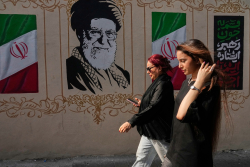
Trump 'Stuck,' Iran Happy To Crush His Midterm Dreams
Read full story at RealClearPolitics →Trump entered office in 2017 with a clear mandate to unwind what he saw as Obama's catastrophic Iran nuclear deal—the JCPOA. He pulled out in May 2018, reimposed sanctions that had been lifted, and declared victory. But sixteen months of maximum pressure sanctions, a drone strike that killed Iranian general Qassem Soleimani in January 2020, and Iranian retaliation haven't produced regime change or a new negotiation. Instead, Iran has accelerated uranium enrichment to 60% purity—closer to weapons-grade than ever—and its nuclear program is now substantially more advanced than when Trump took office. The administration faces a choice it didn't anticipate: live with an Iran closer to a bomb, or negotiate a return to some version of the deal Trump spent political capital destroying.
The midterm stakes are brutal. With Republicans needing a net gain of just five House seats to retake the majority and Senate control genuinely in play, any military escalation with Iran—whether initiated by Tehran or provoked by Trump trying to look tough—would dominate coverage in the final weeks before November 8. A conflict would shatter the "kitchen table economics" message Republicans have built around inflation and energy costs. Worse for Trump's faction: gas prices spike on war risk. The exact thing voters blame Biden for becomes a megaphone for Democratic turnout. Iran's calculus is simple—any crisis helps Democrats by muddying the midterm referendum on Biden's economy.
The historical parallel is genuine: George W. Bush's 2002 midterm surge on national security evaporated within two years when Iraq proved unwinnable. By 2004, he'd shifted to "stay the course" rhetoric. Trump doesn't have that runway. He needs Republicans holding the House in nine weeks. Tehran knows American election cycles better than most Americans do. Each escalation—ballistic missile tests, nuclear advancement announcements, proxy militia activity—lands in the zone where it's serious enough to demand response, but not catastrophic enough to unify the country. It's pressure without triggering the rally-around-the-flag effect that would actually help Trump.
The conservative read is straightforward: this is what happens when you half-measure a foreign policy problem. Trump was right that the JCPOA was a bad deal—it did let Iran off the hook too easily. But he was wrong to exit without a plan for what came next. Maximum pressure without negotiations is just sanctions theater; Iran either capitulates (it didn't) or it races for the bomb (it did). Now, with midterms eight weeks out, Trump can't credibly threaten military action without tanking the midterm message, and he can't negotiate without humiliating himself by returning to the framework he just spent four years dismantling. Iran's got him pinned. That's not deep state sabotage—that's a self-inflicted strategic box.
The immediate pressure point is the International Atomic Energy Agency report scheduled for late September. It will detail exactly how far Iran's uranium enrichment has advanced and whether inspectors have access to sites they need. If the numbers are worse than expected, it creates genuine pressure on the Biden administration to respond before the midterm blackout period. A major escalation in late September could theoretically help Trump by changing the news cycle, but it would also guarantee Democratic messaging about "October surprises" and foreign policy chaos right when Republicans are trying to talk about crime and inflation. Tehran doesn't move until it sees the political moment crystallize.