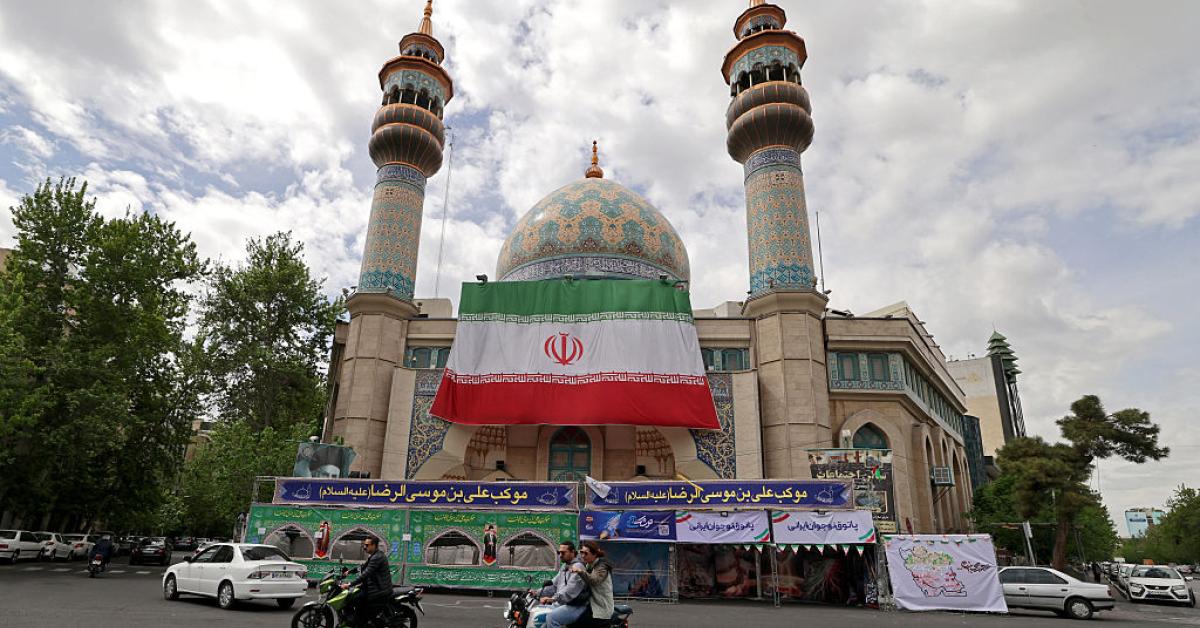
Iran president says Iran won the war as tensions remain high across the Middle East
Read full story at Just the News →Iranian President Masoud Pezeshkian declared victory in what he framed as a "war" against Israel on Sunday, even as Israeli strikes continued across the region and Hezbollah faced sustained military pressure in Lebanon. The claim comes amid a specific sequence of escalations: Iran fired roughly 200 ballistic missiles at Israel on April 14, Israel responded with strikes on Iranian air defenses on April 19, then Iran launched another 300-plus drones and missiles on October 1. Each time, Iran has characterized these volleys as "done" while threatening retaliation if struck again—a pattern that has created a rhetorical trap where declaring victory becomes necessary to avoid looking defeated, yet doesn't actually change the military calculus on the ground.
What's materially at stake is the credibility of deterrence in the region. If Iran can launch unprecedented missile barrages, face Israeli retaliation, declare victory, and then do it again without facing escalating consequences, it signals to non-state actors like Hezbollah and the Houthis that Iran's protection is substantive rather than symbolic. Conversely, if Israel's ability to strike Iranian military targets with impunity continues, it undermines Iran's claim to regional power and invites internal pressure on Pezeshkian—who came to office promising to ease sanctions through diplomacy, not manage perpetual proxy conflict. The concrete question: does Iran actually have red lines, or just rhetorical ones?
The conservative argument here is straightforward: Iran keeps saying it's done fighting while positioning for the next round, which is precisely how you describe a losing position dressed in victor's language. A genuinely winning power doesn't need to declare victory—it just stops being attacked. Israel has demonstrated the ability to penetrate Iranian airspace, strike military installations, and degrade air defenses without significant losses. Iran's missiles, by contrast, have been intercepted at high rates (over 99 percent in the October strike, by Israeli accounts). The fact that Pezeshkian is making this declaration now, as Hezbollah faces collapse in Lebanon and Syria's Assad regime—Iran's closest regional ally—is on the verge of falling, suggests he's consolidating a narrative before the regional balance tips further against Tehran.
Watch the Syrian situation closely as the next inflection point. Assad's government is under unprecedented pressure from rebels, including al-Qaeda-linked groups, in Aleppo and Idlib. If Assad falls or is significantly weakened, Iran loses its primary land bridge to Hezbollah and its Mediterranean bases. This would represent a genuinely strategic loss that no missile declaration can offset. A collapse in Syria would be far more consequential than any individual strike exchange. The other concrete marker: any new Iranian military action in the next 30 days. If Pezeshkian's victory claim holds, there shouldn't be one. If there is, it proves the cycle continues and his declaration was tactical positioning, not a genuine shift in posture.