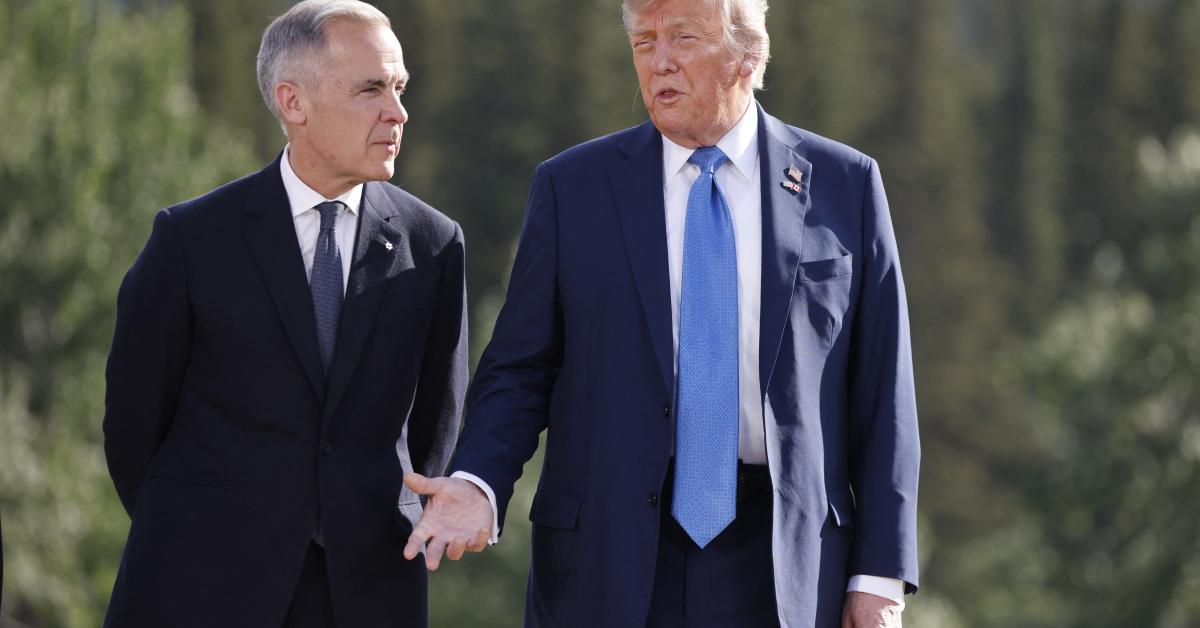
Trump administration imposes 50% tariffs on Canadian goods after Ottawa fails to finalize trade deal
Read full story at Just the News →The Trump administration's 50 percent tariff on Canadian goods went live Tuesday following the collapse of negotiations to revise the USMCA trade agreement before the deadline. The tariffs target a $40 billion annual trade flow—roughly 15 percent of total U.S.-Canada commerce—hitting automobiles, agricultural products, minerals, and energy exports. Prime Minister Mark Carney responded within hours by suspending all bilateral trade talks and announcing matching retaliatory tariffs on American goods, including lumber, agricultural machinery, and industrial materials worth approximately $35 billion. The tariffs take effect immediately, marking the first major trade confrontation under Trump's second term and the most significant disruption to North American commerce since the original NAFTA disputes of 2018.
The immediate cause was Ottawa's inability to finalize renegotiated terms before Trump's self-imposed deadline. The USMCA, which replaced NAFTA in 2020, includes a built-in review mechanism set for 2026, but Trump moved the deadline forward to January 15, 2025. Canada's negotiating position weakened considerably after the Conservative Party's victory in the November 2024 elections, followed by the resignation of Justin Trudeau and Carney's appointment as Liberal leader and interim prime minister. Carney inherited negotiations already stalled over American demands for stricter rules of origin for automobiles, higher dairy tariffs, and tighter restrictions on Chinese investment in Canada—positions Ottawa resisted as economically damaging to manufacturers and farmers in Ontario and Quebec.
For Canadians, the tariffs hit hardest in three sectors: automotive production accounts for $80 billion in annual trade and employs over 150,000 workers; agricultural exports, especially canola and grain, support rural economies across the prairies; and energy, where Canada supplies 60 percent of American crude oil imports, faces immediate price realignment. American consumers will see higher prices on vehicles and imported goods within weeks. But the real economic damage flows through supply chains—40 percent of parts in vehicles assembled in Detroit come from Canadian factories, meaning U.S. automakers face higher production costs that will eventually reach the showroom. Canadian pension funds and mutual funds holding U.S. stocks will lose value; American pension funds holding Canadian assets face the same risk.
The conservative argument here is straightforward: a country that supplies nearly one-fifth of America's imports while maintaining a persistent trade surplus with the U.S. was extracting concessions rather than negotiating fairly. Canada's negotiating stance—refusing to tighten rules that allow Chinese companies to use Canada as a backdoor into North American markets, resisting higher agricultural protections, insisting on favorable auto production terms—amounts to free-riding on American security guarantees while blocking reciprocal market access. The USMCA's 2026 review was designed for exactly this moment: modernizing terms that no longer reflected geopolitical reality. When Canada wouldn't move, Trump did. The tariff is leverage, not permanent policy. What matters is whether Carney folds or whether he forces Trump to accept higher costs for being firm.
The next move lands with Carrey and the incoming Conservative government under Pierre Poilievre, who takes office in early February. Carney has framed the tariffs as unacceptable and suspended talks, but he holds the interim position only until the Liberal Party selects a new permanent leader or loses the next election. Poilievre, who has criticized Trudeau-era China policy as too soft, may view renegotiation differently. Watch for three signals: whether Carney resumes negotiations within 10 days (indicating willingness to compromise); whether Poilievre makes a public statement on trade policy before taking office (signaling his government's position); and whether Canada escalates or maintains current retaliatory tariff levels by January 25. If neither side budges, supply chain disruptions ripple through both economies by February, forcing a crisis negotiation when the new Conservative government is barely installed.