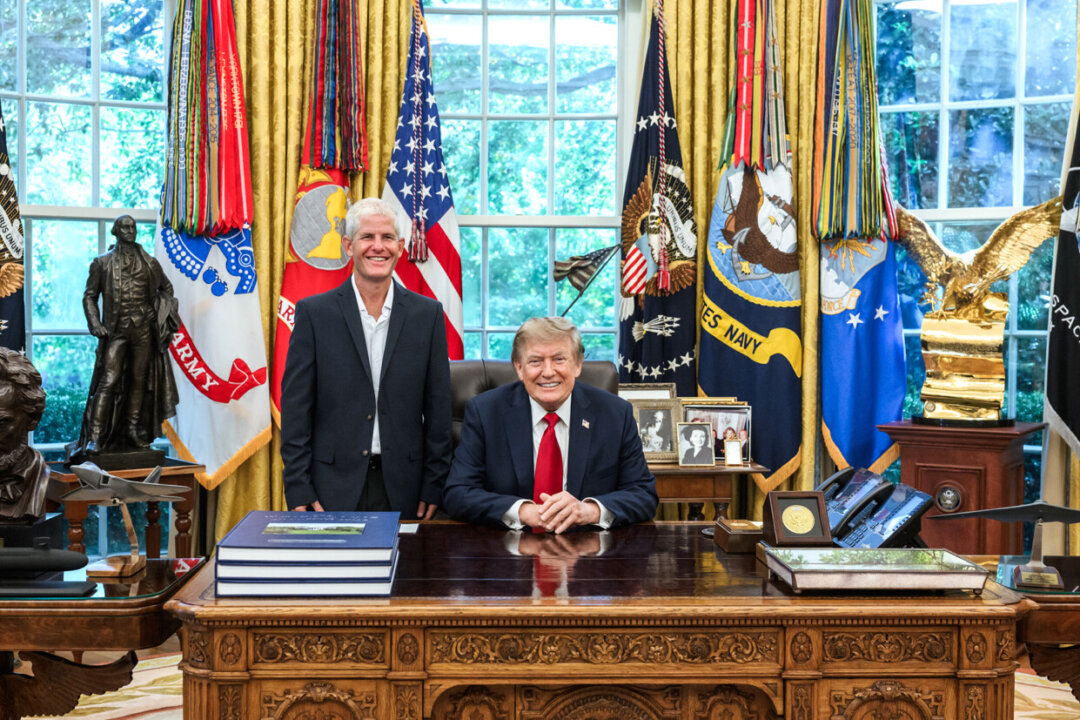
Trump Hosts American Missionary Pilot Freed From Captivity in Niger at White House
Read full story at Epoch Times →# Why This Matters
Kevin Rideout, an American missionary pilot, spent 18 months in captivity after being taken hostage in Niger by an armed group in early 2025. His release came after months of quiet diplomatic negotiations that the State Department had largely kept from public view—negotiations that accelerated once Trump returned to office in January 2026. The White House ceremony on August 21 was deliberately staged as a victory lap, with Rideout appearing in the Oval Office for photos and remarks. At 54 years old, Rideout had been flying medical and humanitarian supply missions for a Christian nonprofit when his plane was forced down near the Mali border.
The specifics of Rideout's release remain partially opaque. Officials have not disclosed whether money changed hands, though hostage negotiations in West Africa routinely involve payments filtered through intermediaries. The group holding Rideout was linked to ISIS-affiliated militants operating across the Sahel, a region where the U.S. military maintains drone operations and special forces presence but lacks formal treaties with most governments. Rideout's case represented exactly the kind of hostage situation that typically drags on for years—American citizens without high political value, held by groups the U.S. won't officially negotiate with. His relatively swift release suggested either significant behind-the-scenes leverage or a negotiating posture different from the Biden administration's stated policy of not paying ransoms.
The historical comparison is to the 2014 release of Bowe Bergdahl, the Army sergeant traded for five Taliban detainees held at Guantanamo Bay. That deal sparked months of debate about whether the U.S. had effectively validated hostage-taking as a negotiating tactic and whether the freed prisoners would rejoin combat. Rideout's case differs in that he was held by a non-state actor in a region where the U.S. has no formal prisoners to trade, but the underlying tension remains: does a visible, celebrated hostage recovery encourage more abductions of Americans abroad, or does it demonstrate resolve to bring citizens home?
The Trump administration's framing treats this as evidence that a more aggressive posture on hostage negotiations—one willing to use intelligence assets, military pressure, or financial incentives—works faster than the previous administration's caution. Officials have pointed to Rideout's case as proof that Americans abroad can trust this White House to prioritize their safety over policy principles. That's the direct pitch. Critics counter that the opacity itself is the problem: if the U.S. did pay, it signals to militant groups holding hostages that Americans are worth capturing. If it used military or intelligence operations to pressure the group, those details remain classified, making it impossible for Congress or the public to assess whether the precedent is one they want set.
What matters most now is whether other American hostages currently held in the region—there are at least two confirmed cases in adjacent areas of West Africa and the Sahel—see accelerated release negotiations. The State Department's hostage recovery office will face pressure to apply whatever method freed Rideout to other cases. Congress will likely demand classified briefings on how the release happened. And missionary and NGO groups operating in high-risk regions will have to recalculate their security protocols based on whether they believe hostage situations are now likely to be resolved quickly or whether Rideout's case was a singular success.
The next concrete moment: Congress's Intelligence and Foreign Relations committees have requested a classified briefing scheduled for early September, where administration officials will explain the release mechanism. That briefing will either calm anxieties about ransoms funding terrorism or confirm suspicions that the administration opened a new channel for hostage payments. Rideout himself is reportedly planning interviews with conservative media outlets, where the full operational details may leak before any official disclosure.