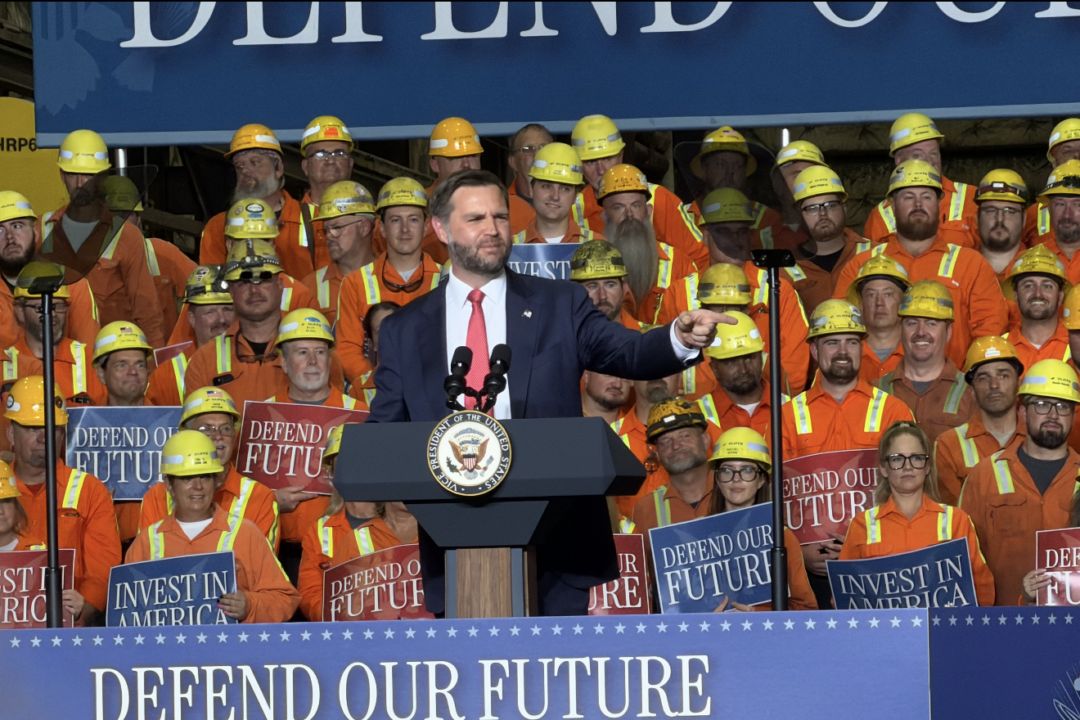
Vance Visits His Ohio Hometown to Hail $1 Billion Investment in Steel Plant
Read full story at Epoch Times →Vice President JD Vance returned to Middletown, Ohio on August 21 to announce a $1 billion investment in a steel manufacturing facility—a direct payoff from the administration's tariff strategy and domestic manufacturing push. The investment comes from Cleveland-Cliffs Inc., one of the largest domestic steel producers, which has expanded aggressively since Trump's second term imposed steep tariffs on foreign steel imports. Middletown, Vance's hometown with a population under 50,000, had been hollowed out by decades of industrial decline; the city's largest employer, AK Steel, had shed thousands of jobs since the 1990s. This announcement represents the first major private capital commitment directly tied to the tariff regime that Vance championed as a candidate.
The stakes are material and local. The $1 billion investment could generate 500 to 1,000 construction jobs over 18-24 months, followed by 300 to 500 permanent manufacturing positions at wages typically $60,000 to $80,000 annually for skilled workers. For a town where median household income sits around $42,000, this is genuinely transformative. But the broader bet is whether tariff-induced domestic production can sustainably compete without continued trade barriers or government support. Cleveland-Cliffs has been one of the few domestic steel producers profitable enough to expand; most competitors have either shut down or consolidated. If the tariff protection gets unwound or undercut by trade negotiations, the plant's long-term viability becomes questionable.
The conservative read is straightforward: this is proof the tariff strategy works. For years, mainstream economists warned that tariffs would simply raise prices for consumers and invite retaliation without reviving manufacturing. Instead, within two years of the tariff regime, a major steel producer is making a nine-figure bet on American production in a city that had been written off by both political parties. Vance's presence isn't sentimental theater—it's evidence that populist economic nationalism can create actual jobs in places that neoliberalism abandoned. The investment wouldn't exist without the tariff floor protecting domestic producers from Chinese and Japanese steel priced below production cost. Critics will say consumers paid more for steel, but those costs are diffuse and invisible; this plant and these jobs are concrete.
The next test comes in two places. First, watch the tariff negotiations over the next 12 months—any significant rollback in steel tariffs before this plant becomes operational would crater investor confidence and potentially stall construction. Second, monitor whether other major manufacturers follow Cleveland-Cliffs' lead. One $1 billion plant is a proof of concept; sustained reshoring requires a pipeline of similar commitments. The administration will use Middletown as a campaign exhibit, but the real question is whether it becomes replicable or remains a one-off announcement timed for political benefit.