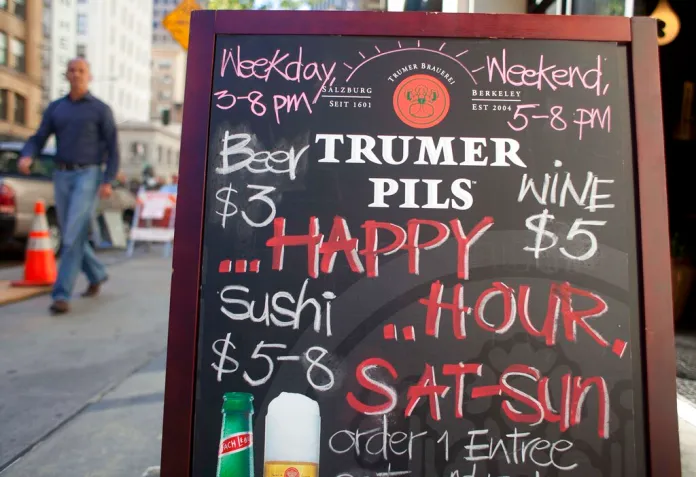
Happy hour is ‘price discrimination’: Tiana Lowe Doescher talks new FTC warning
Read full story at Washington Examiner →# Why This Matters
The Federal Trade Commission just sent warning letters to major retailers and online platforms—including Amazon, Walmart, Target, Apple, Disney, and others—signaling that personalized dynamic pricing could violate consumer protection laws. The FTC specifically flagged the practice of charging different prices to different customers for the same product based on their browsing history, location data, purchase patterns, or demographic profiles. This isn't theoretical: companies have been experimenting with this for years. Airlines and hotels have done it openly for decades. But now the FTC under Chair Lina Khan is drawing a line, warning that if these pricing schemes cross into deceptive territory—hiding the real basis for price differences, or exploiting vulnerable populations—enforcement actions could follow.
What's actually at stake is the architecture of how companies collect and weaponize personal data. The warning letters don't ban dynamic pricing outright; they focus on the data collection methods that enable it. If you're a 25-year-old professional in Brooklyn seeing a higher price than a 60-year-old in rural Kansas for the same sneaker, that's the mechanism at work. The real concern for the FTC is whether companies disclose this clearly, whether they're using protected characteristics like race or disability status to discriminate, and whether they're targeting elderly or low-income consumers with predatory pricing. For consumers, this means the data your phone, browser, and shopping apps collect about you is being weaponized not just for ads, but to extract maximum value from your wallet specifically.
The FTC's move echoes a pattern from the 2010s when regulators started scrutinizing "algorithmic discrimination"—the idea that invisible data-driven systems could produce the same discriminatory outcomes as explicit racial or gender-based policies. What's different now is the FTC is being aggressive about the data collection itself, not just the pricing outcome. The agency is essentially saying: before you even get to the price you see, the fact that we collected this much personal information about you for this express purpose—to charge you differently—is itself potentially deceptive or unfair under Section 5 of the FTC Act.
The populist critique here is straightforward: companies spent twenty years collecting intimate details about your life—where you go, what you buy, how much money you have, your medical history through app permissions—ostensibly for "better recommendations" and "personalization." In reality, they were building a dossier to squeeze more money out of you. The FTC warning suggests this wasn't just creepy; it was illegal. The fact that it took this long to enforce, and that major retailers still haven't been charged, reflects how far behind consumer protection law has fallen compared to corporate data harvesting. This isn't just about paying more for a coffee at happy hour; it's about whether companies get to secretly profile you and then exploit that profile for profit.
The concrete next move: watch for the FTC to actually bring enforcement actions against one of the companies that received warning letters. Chair Khan has signaled willingness to litigate, and picking a high-profile target like Amazon or Walmart could force the issue into court. If the FTC wins, expect a wave of lawsuits and state-level copycat enforcement. If it loses, the entire framework collapses and companies get a green light to price-discriminate based on personal data as long as they disclose it somewhere in the fine print. The real deadline is whether the FTC can move faster than Congress does—there's already talk of privacy bills that could explicitly address this, which would either codify the FTC's position or undermine it depending on the language.