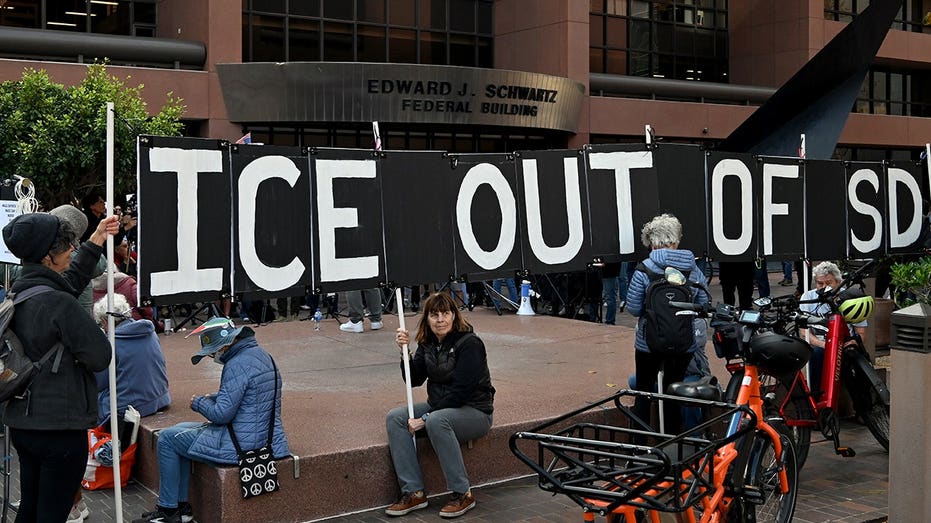
Southern California hits ICE with 'dumbfounding' roadblock as top lawmaker rips 'reckless' hypocrisy
Read full story at Fox News →San Diego County's board of supervisors voted 3-2 last week to prohibit Immigration and Customs Enforcement agents from using the county's firearms training facilities—a move that blocks federal immigration enforcement from a resource most local law enforcement agencies routinely access. The decision, pushed by Supervisors Nora Vargas and Jamal Herbish, restricts ICE access to the San Diego Regional Public Safety Training Center, a county-owned facility that has trained thousands of officers annually. County Supervisor Brian Jones, one of the two dissenting votes, called the decision "dumbfounding" and accused the board of "reckless hypocrisy" for claiming to support law enforcement while simultaneously handicapping federal agents tasked with enforcing immigration law.
The practical effect is straightforward: ICE agents operating in San Diego County—one of the busiest enforcement jurisdictions in the nation—will now have to source firearms training elsewhere, likely through federal facilities or private contractors. This adds friction to operations in a region where ICE arrested 4,847 people in fiscal 2023 alone. The vote also sends a signal to other California jurisdictions, where similar resolutions have been introduced or proposed in recent months, that local governments can unilaterally restrict federal law enforcement access to public resources without explicit legal barrier.
Jones's critique cuts to an argument Republicans have weaponized effectively against Democratic-led jurisdictions: the claim that sanctuary policies constitute selective enforcement of law. His point is direct—if the board genuinely supported law enforcement, it would not create obstacles for one federal agency while allowing others to use the same facilities. The conservative read here isn't about immigration ideology in the abstract; it's about whether elected officials should be permitted to use municipal infrastructure as a lever to obstruct federal enforcement operations they dislike.
San Diego's vote reflects a broader California strategy to constrain ICE through administrative friction rather than outright legal prohibition. Unlike explicit sanctuary laws that forbid cooperation, this approach creates practical barriers—access restrictions, resource denial, information-sharing blocks—that slow enforcement without openly defying federal authority. The tactic gained prominence after the Trump administration's 2017 immigration surge, when California counties discovered they could complicate ICE's work through local control of shared facilities.
What happens next depends on whether this triggers legal challenge or cascades into county-wide policy. Republican state legislators have already signaled they plan to introduce legislation at the state level to prohibit California counties from restricting ICE access to public facilities—a direct confrontation that would test whether state law can override local board decisions on facility use. Additionally, watch whether San Diego's action draws ICE to file a civil rights complaint with the Department of Justice, alleging discriminatory denial of services, a move that could force the county into federal litigation over the facility policy.
The June 2025 supervisors' election cycle becomes the measuring stick for whether San Diego voters endorse this approach. Vargas and Herbish will run knowing their names are permanently attached to this vote; Jones and others have already begun framing the choice as one between supporting law enforcement or obstructing it. That framing may matter more in a county that, unlike inland California, still leans conservative on public safety issues.