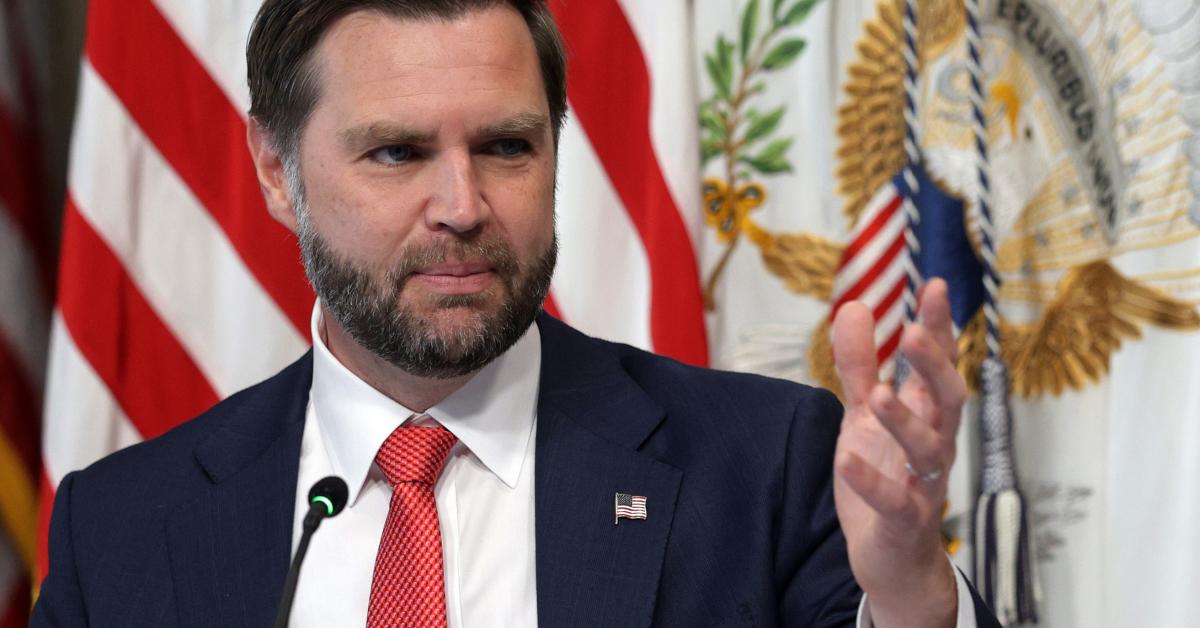
Bessent has 'very discreet plan' to reduce the $40 trillion national debt, Vance says
Read full story at Just the News →Treasury Secretary nominee Pete Bessent is promising a debt reduction strategy so secretive that even his incoming boss's running mate can't—or won't—publicly detail it. According to Vice President-elect JD Vance, Bessent has a "very discreet plan" to tackle the $40 trillion national debt, a figure that has exploded past pre-pandemic levels and now represents roughly 120 percent of annual GDP. Vance made the comment in recent remarks but offered no specifics about what Bessent's plan actually entails, when it might be implemented, or what it requires from Congress. The vagueness is notable given that Trump explicitly rejected deficit reduction as a campaign priority, instead focusing on tariffs, mass deportations, and tax cuts—policies that historically increase rather than decrease federal spending.
The backdrop here matters enormously for understanding what's at stake. The Committee for a Responsible Federal Budget, a nonpartisan watchdog, calculated that Trump's policies during his first term (2017-2021) added $8.4 trillion to the national debt over a 10-year projection period. Biden approved $4.3 trillion in spending over his first three years and five months. The debt ceiling will need to be raised again within months of Trump's inauguration—likely in the spring of 2025—and Congress will face the politically toxic choice of either voting to increase it or risking default. If Bessent's plan exists, it will need to either reduce spending, increase revenue, or convince markets that the debt trajectory has stabilized. Right now, annual interest payments on the debt are approaching $700 billion and eating into funds for defense, infrastructure, and social programs.
The conservative case against the current debt path is straightforward and has real merit: the government is spending money it doesn't have at a scale that crowds out private investment, distorts interest rates, and ultimately transfers wealth from future taxpayers to current bondholders and government contractors. Trump voters were explicitly told that Washington wastes trillions on bureaucratic bloat and foreign aid, and that a businessman president could cut the fat without touching Social Security or Medicare. Bessent's silence suggests either that such cuts don't exist at scale, or that the plan involves tax increases and spending reductions unpopular enough to keep hidden until after the election. A "discreet plan" is a plan that can't survive public scrutiny before implementation.
What actually happens next will depend on Treasury market signals and Congress's appetite for conflict. Bessent will need Senate confirmation, which gives him an opportunity to either describe the plan or continue deflecting. The debt ceiling fight—likely arriving in late spring 2025—will be the real test, since it forces a showdown between Republican rhetoric about fiscal responsibility and the actual mechanics of governing. If Bessent proposes specific spending cuts, they'll face immediate opposition from Republicans whose districts depend on those programs. If he proposes tax increases, he'll face revolt from Trump's base and his own party's tax-cut caucus. The market will be watching Treasury yields and credit default swaps; if investors begin pricing in serious default risk, that pressure could force action regardless of political preferences.
The most likely scenario is that "very discreet" is code for "doesn't exist in any form that survives contact with reality." Vance's comment may be an attempt to claim fiscal responsibility without actually committing to anything measurable. But Treasury secretary nominees historically do face detailed questioning about their economic plans during confirmation hearings, and Bessent will have to answer directly about deficits, debt trajectory, and the mechanics of any reduction strategy. Watch his confirmation testimony closely—what he doesn't say will matter as much as what he does.