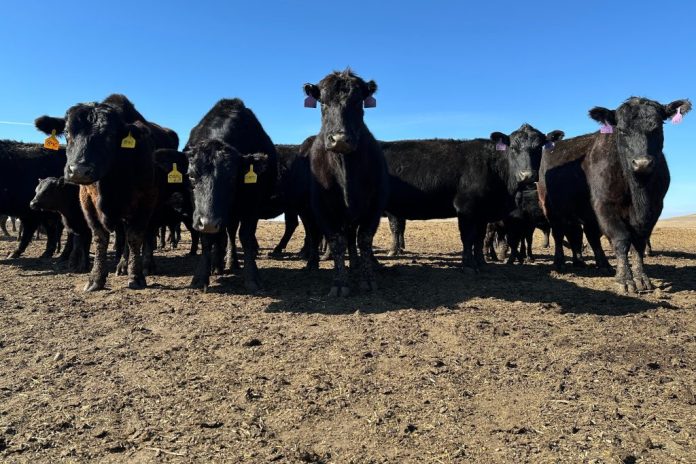
Sheehy and Dowing speak out against Trump’s plan to lower beef prices: ‘Harm our ranching families’
Read full story at Washington Examiner →President Trump's sudden pivot on beef imports has created an immediate fissure within his own party—and it reveals something important about how tariff policy actually works on the ground. On Friday, Senator Tim Sheehy and Representative Troy Downing, both Montana Republicans who rode Trump's coattails into office, went public with their opposition to his plan to temporarily lower tariffs on imported beef. This isn't abstract disagreement; it's a direct collision between Trump's stated goal of lowering consumer prices and the economic survival of ranchers in a state that produces roughly 3.5 million head of cattle annually and ranks fourth nationally in beef production.
The mechanism here matters. Trump's theory is that allowing more cheap beef imports will cool inflation at the grocery store—a politically valuable win heading into his term. But Sheehy and Downing are arguing that imported beef will simply displace American product rather than lower prices. Ranchers will still need to sell their cattle, and a flooded market means lower prices they receive at auction, not lower prices at retail. The ranching community absorbs the loss while processors and retailers pocket the margin. For Montana families operating on thin profit margins in a capital-intensive business where a single year of losses can threaten generational operations, this is an existential issue, not a talking point.
This creates a genuine tension in Trump's protectionist framing. His entire political brand rests on defending American workers and producers from global competition. Tariffs exist, in his telling, to protect domestic industries from being undercut. Yet here he is using tariff relief as an inflation-fighting tool—which means asking specific American producers to bear the cost of cheaper consumer goods nationwide. Sheehy and Downing are simply calling this trade-off what it is: a subsidy from Montana ranchers to grocery shoppers in Denver and Chicago.
The conservative argument here is straightforward: if you're going to impose tariffs on foreign goods to protect American jobs and industries, you can't selectively abandon that principle when it becomes politically inconvenient. Either tariffs protect domestic production or they don't. Either we believe American ranchers deserve market protection or we're just using them as political cover. Trump ran on the first principle. The moment he starts leveraging tariff policy as an inflation tool, he's admitting that free-market principles matter more than American producer protection when the White House needs a quick win on cost-of-living issues.
What to watch: Trump hasn't yet implemented the tariff reduction—it remains in the discussion phase. The key moment comes if and when he formally announces the policy through the U.S. Trade Representative's office. That's when the real pressure campaign begins. Sheehy and Downing will likely be joined by other red-state agricultural representatives, and the American Farm Bureau Federation and National Cattlemen's Beef Association will mobilize. The timeline is tight; any tariff action typically faces a 30-60 day comment period before implementation. If Trump moves on this before spring—cattle auction season—the political blow-back from ranchers in red states could force a reversal within weeks.