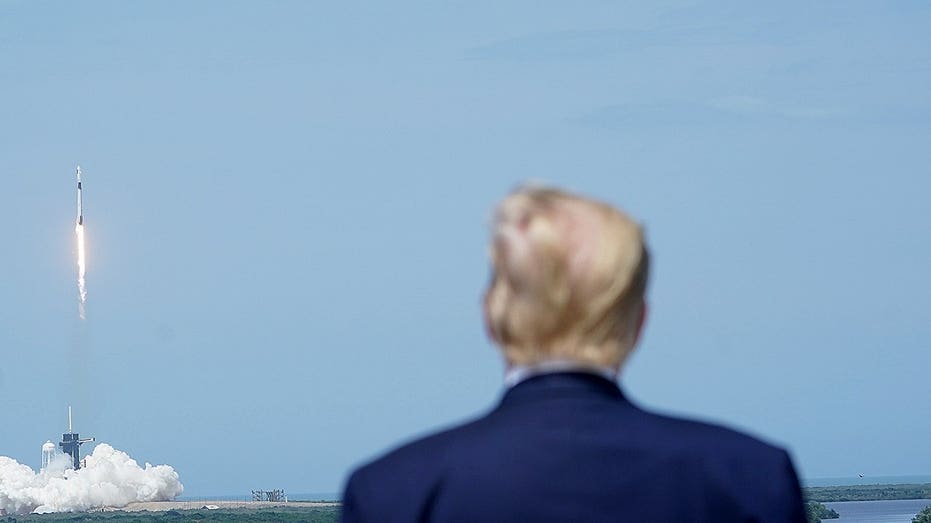
Trump to transform spaceflight from spectacle to status quo targeting 3 launches per day
Read full story at Fox News →Donald Trump's space acceleration plan, outlined through executive orders and statements from his incoming administration, targets a specific infrastructure transformation: moving from roughly 100 annual launches today to 1,000-plus within seven years. This isn't rhetorical. The numbers assume three daily launches from existing Florida and Texas pads, plus new commercial sites in Alaska and potentially other states. SpaceX currently controls about 60% of U.S. launch capacity; Blue Origin, Rocket Lab, and Axiom Space would need to scale production by orders of magnitude to hit these targets, which means foundry expansion, supply chain acceleration, and regulatory approval for new launch facilities in civilian airspace zones that have never handled this traffic density.
The concrete pressure point is the Federal Aviation Administration, which currently licenses each launch individually through a cumbersome environmental and safety review process. The Trump plan requires stripping back approval timelines and creating dedicated orbital corridors carved out of existing civilian airspace. This means restructuring how the FAA coordinates with NORAD, NASA, and commercial airlines—a coordination problem that doesn't have modern precedent. The agency approved roughly 60 licenses last year. To reach 1,000 launches, that workload increases 16-fold while the FAA's budget has not. Someone has to physically redesign airspace management software, train controllers for new procedures, and decide what happens when a launch delay cascades into commercial flight arrivals.
The stated justification combines national security with economic dominance: China and Russia are accelerating their own launch cadences; waiting for perfect conditions is surrendering space-based advantage in communications, surveillance, and potential weapons systems. The administration view, unfiltered, is that environmental review has become performative obstruction—that a launch pad's construction doesn't materially alter the coast more than a highway intersection, and that the marginal risk of a 1,001st launch versus a 1,000th is infinitesimal. This reads as anti-regulatory momentum. The harder counterargument, not phantom-based, is that increased reentry debris, engine testing noise near populated areas, and loss-of-vehicle incidents over water become statistically inevitable at this volume. Even a 0.1% failure rate compounds across 1,000 launches.
What happens to the Long Island Sound if a Falcon 9 stage fails during east-coast ascent? Who pays for the cleanup? Current indemnity laws cap commercial space company liability at a federal pool. Scaling launches scales that exposure. The Trump position amounts to: we'll worry about that when it happens, and the liability framework will adjust. The regulatory position, bipartisan on this point, is that you pre-emptively redesign insurance and accident response. Neither side is wrong abstractly; they're trading off velocity against deliberation.
Watch the FAA's new licensing framework—due for regulatory proposal within 90 days of Trump's space directives. The agency will either publish streamlined templates for launches (essentially pre-approval buckets), or it will resist restructuring and face direct White House pressure to delegate authority to state-level agencies or SpaceX's internal safety certifications. A second marker is congressional action on liability caps; expect bills to either raise or eliminate them. Third: Blue Origin's New Glenn rocket, scheduled for first launch in 2025, will be a live test of whether the new approval speed actually works. If that vehicle gets environmental clearance in under six months, the precedent holds. If litigation stalls it past one year, the whole cadence plan fractures.