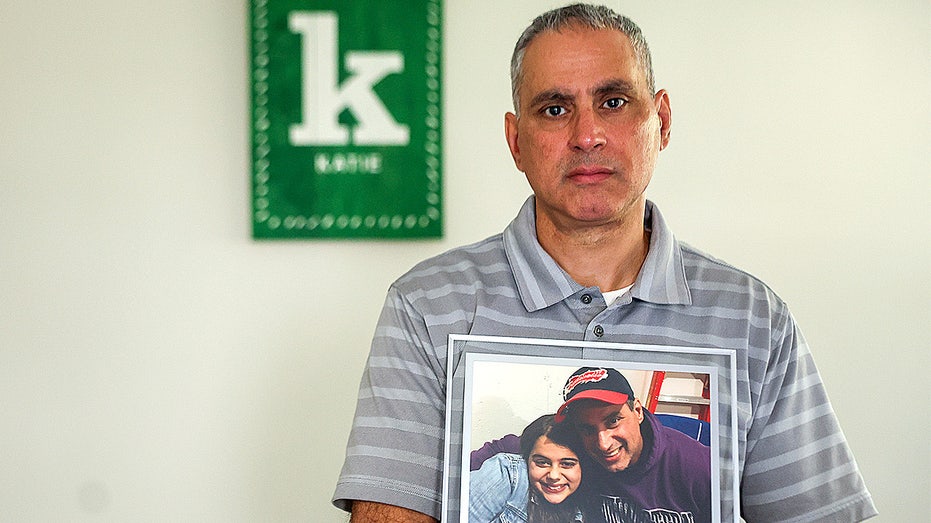
EXCLUSIVE: Angel dad finds ‘new purpose’ with ICE after daughter’s killing turned his world upside down
Read full story at Fox News →Joe Abraham's appointment as director of ICE's VOICE office represents a direct pipeline from personal tragedy into federal enforcement architecture. His daughter Savtiermira Abraham, 20, was killed in 2021 by illegal immigrant Edwin Mejia in Maryland—a case that became the organizing principle for Abraham's public activism and eventually landed him in a formal government role under the Trump administration. VOICE (Victims of Immigration Crime Engagement) exists specifically to document and publicize crimes committed by undocumented immigrants, a unit that had been deprioritized during the Biden years but is now positioned as a centerpiece of ICE's victim services operation.
The stakes cut in opposite directions. For Abraham and families like his, the appointment signals that their losses will no longer be treated as isolated tragedies suitable for local crime reporting but as systemic arguments about immigration enforcement itself. VOICE publishes crime statistics, victim testimonies, and case details designed to build a public narrative linking illegal immigration to violent crime. For immigration advocates and critics of the Trump administration, this represents the weaponization of real grief for political messaging—using individual victims' deaths as rhetorical ammunition in a broader policy debate. The practical question is whether VOICE becomes a genuine victim services office or primarily a communications apparatus for stricter immigration enforcement.
What distinguishes this from typical revolving-door lobbying is that Abraham isn't coming from a think tank or advocacy nonprofit. He is, by any reasonable definition, an aggrieved family member. His daughter was killed. That's not ideological—it's structural. The tension is whether a person experiencing genuine trauma can simultaneously serve an objective government function, or whether personal loss necessarily becomes a filter that shapes which cases get emphasized, which statistics get highlighted, and which victims' stories circulate through federal platforms. Abraham's credibility depends entirely on whether VOICE treats all victim cases equally or whether cases involving undocumented perpetrators receive disproportionate amplification.
The conservative read here is straightforward: this is what happens when the system fails. A young woman is dead because immigration law wasn't enforced. Her father has spent years trying to prevent other families from experiencing the same loss. Now he's been given actual authority to document the scope of a problem the previous administration actively ignored. From this perspective, VOICE under Abraham represents basic accountability—not revenge, but a recognition that victims of crimes committed by deportable offenders have claims on federal attention equal to any other crime victims, and that the public has a right to know the scale of this particular category of crime. If that "politicizes" grief, the argument goes, it's because the grief was first created by a failure to enforce existing law.
Watch for two immediate pressure points. First, ICE under Trump's immigration czar Tom Homan will release expanded crime statistics from VOICE within weeks—these will become the baseline for how the administration measures its immigration enforcement success. Second, watch whether civil rights groups challenge VOICE's methodology, particularly its treatment of prosecutorial discretion and how it classifies cases. The office's credibility collapses if statistics appear cherry-picked or if victim representation becomes visibly unequal based on whether the perpetrator is undocumented. Abraham's personal narrative is compelling, but it's only politically durable if the office's operations can withstand scrutiny from people operating in good faith.