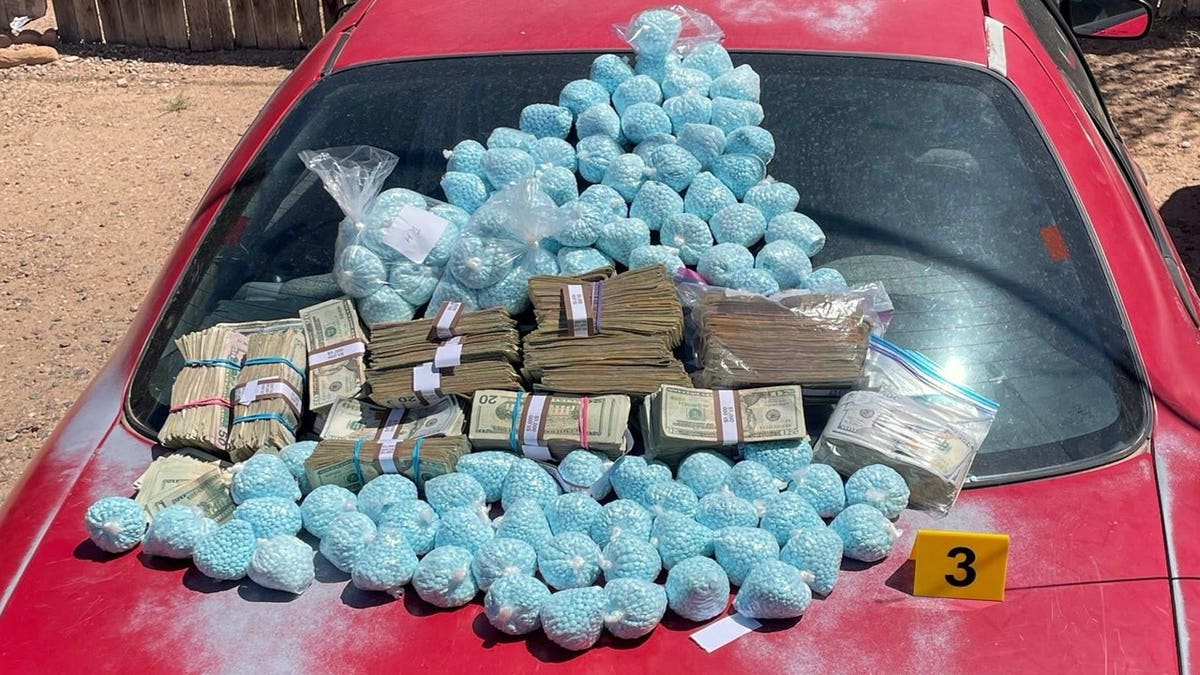
As a US attorney, I see fentanyl's horrifying toll up close. Congress must act now
Read full story at Fox News Opinion →The author of this op-ed is U.S. Attorney Matthew M. Graves for the District of Columbia, which gives him direct prosecutorial jurisdiction over federal drug cases in the nation's capital—a city that recorded 506 opioid overdose deaths in 2022, with fentanyl involved in roughly 80 percent of them. His argument rests on a specific claim: fentanyl is now the leading cause of death for Americans aged 18-45, a demographic category that previously saw traffic accidents and suicides compete for the top spot. CDC data confirms this shift occurred around 2021-2022, when synthetic opioid deaths climbed past 70,000 annually nationwide. Graves is calling for Congress to increase mandatory minimum sentences for fentanyl trafficking, effectively pushing dealers into longer prison terms at the federal level where sentences already start at five years for distribution and ten years for trafficking large quantities.
What's actually at stake here is the design of federal drug enforcement itself. Current law treats fentanyl distribution differently than heroin or cocaine, but the mandatory minimums available to prosecutors remain the same tool that criminologists have argued for decades either deters crime minimally or deters it unequally across racial lines. A U.S. attorney calling for longer sentences isn't neutral analysis—it's an institutional player asking for heavier weaponry in his own arsenal. The consequence would fall on people convicted in federal court: longer prison time, later release dates, and reduced eligibility for drug courts or diversion programs that some research suggests work better at preventing repeat offenses than incarceration.
The conservative argument here is straightforward and populist: dealers are poisoning a generation, the government's job is to stop them, and soft sentences have failed. Prosecutors point out that when fentanyl arrives in pressed pills or counterfeit oxycodone, users often don't know what they're taking—they're not choosing to use fentanyl, they're being sold it under false pretenses, which elevates this from a user-choice story to a fraud-and-poisoning story. A dealer mixing fentanyl into heroin or counterfeit Xanax without buyer knowledge is essentially committing murder-by-deception. From this angle, longer sentences aren't excessive—they're proportionate to the actual harm.
The historical parallel that applies is the cocaine sentencing wars of the 1980s-90s, when Congress ratcheted up mandatory minimums for crack and powder cocaine distribution, creating a 100-to-1 disparity that fell hardest on Black defendants and communities. That escalation didn't stop cocaine use but did produce a generation of lengthy federal sentences that criminal justice reformers still cite as a cautionary tale about mandatory minimums outrunning actual deterrence. The argument then was identical to now: dealers are destroying America, courts need to put them away longer. The outcome was mass incarceration without proportional reductions in drug availability or use.
What to watch is whether Congress actually moves on this. Graves isn't writing into a vacuum—he's a sitting U.S. attorney with platform access, and both Democratic and Republican lawmakers face constituent pressure on overdose deaths in their districts. A bill to increase fentanyl-specific sentences could move quickly if it gains bipartisan cover. The specific mechanism would likely be a sentencing enhancement bill or a new fentanyl trafficking tier with mandatory minimums separate from general heroin distribution. Watch for such a proposal in the next Congress or in the Senate Judiciary Committee, where drug sentencing bills have been introduced before. Also watch whether federal prosecutors themselves will split on this—some U.S. attorneys' offices have begun diversion-focused approaches, and institutional consensus isn't monolithic.