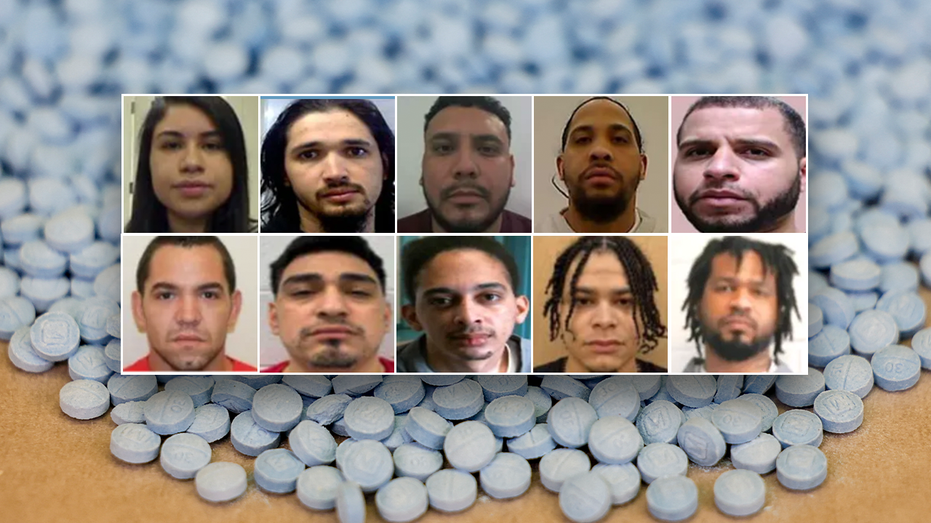
EXCLUSIVE: Fentanyl deaths plunge 22% as Trump White House touts crackdown on deadly drug crisis
Read full story at Fox News →The Trump administration is claiming credit for a sharp reversal in America's fentanyl epidemic: the number of synthetic opioid deaths dropped from 48,913 in 2023 to 38,084 in 2024—a 22 percent decline that marks the steepest year-over-year fall in overdose deaths in recent memory. The White House attributes this to intensified border enforcement and ICE operations targeting fentanyl trafficking networks. These figures come from preliminary CDC data released in January 2025, which the administration has highlighted as vindication of its immigration-focused drug policy approach. The numbers matter because fentanyl has been the primary driver of American overdose deaths since roughly 2015, when illicitly manufactured versions began flooding the illicit drug supply, and any sustained reversal of that trend would represent a genuine public health shift.
The concrete mechanism behind this claimed victory centers on enforcement at the southern border and federal drug seizures. U.S. Customs and Border Protection reported seizing 26,144 pounds of fentanyl at the southern border in 2024, up from 14,664 pounds in 2023—nearly double. ICE arrested over 2,300 individuals on fentanyl-related charges in 2024. The administration's pitch is straightforward: stop the supply at the source (Mexican cartels and synthetic production), and overdose deaths follow. This directly contradicts the prevailing public health establishment consensus of the past decade, which prioritized harm reduction—needle exchanges, naloxone distribution, medication-assisted treatment—over supply-side interdiction as the primary lever for reducing deaths.
What's genuinely at stake here extends beyond bragging rights over statistics. If border enforcement and arrest-heavy strategies are producing measurable results on overdose deaths, it reshapes the entire federal drug policy debate—potentially redirecting billions in spending, treatment philosophy, and law enforcement priorities. For families losing loved ones to fentanyl, it means the difference between a crisis government claims to have ignored and one it's actively arresting. For the treatment and harm-reduction advocacy sector, which has dominated addiction policy since 2017, it threatens funding reallocation and rhetorical dominance. For border security advocates, it validates the "seal the border and crime drops" argument in its most tangible form.
The conservative read here is direct: the previous administration inherited an open border and a fentanyl crisis it treated as a treatment problem requiring endless naloxone distribution. That approach, combined with minimal enforcement against traffickers and cartel operations, allowed synthetic opioid deaths to plateau at nearly 50,000 annually. Trump's team tightened the border, ramped up arrests, increased seizures, and deaths fell 22 percent in one year. You don't need a PhD in epidemiology to see cause and effect. The establishment resisted this approach because it prioritized prosecuting users and traffickers over celebrating recovery through pharmaceutical intervention. But the death count doesn't lie.
The complication worth noting: overdose deaths have multiple causes and multiple momentum factors. The fentanyl supply itself may be shifting as Mexican cartels adjust production and distribution in response to enforcement pressure—meaning some decline could reflect cartel behavior changes rather than U.S. policy alone. Harm reduction advocates counter that deaths also fell during periods of increased naloxone distribution and medication-assisted treatment access, making attribution unclear. Public health researchers will spend years parsing whether 2024's decline reflects border enforcement, market shifts, or continued investments in treatment infrastructure that Trump critics claim received no credit.
Watch for three concrete next steps: First, the CDC's finalized 2024 overdose data release (expected March 2025), which will either confirm or complicate the preliminary 22 percent figure. Second, congressional allocation of drug enforcement funding in the 2026 budget—whether Republicans increase ICE/CBP fentanyl operations funding or redirect it elsewhere. Third, whether the administration releases detailed breakdowns showing which enforcement tactic (seizures vs. arrests vs. specific cartel disruptions) correlates most tightly with the death decline, or whether they keep the victory at the headline level.