Federal court strikes down Biden-era ATF ghost gun restrictions
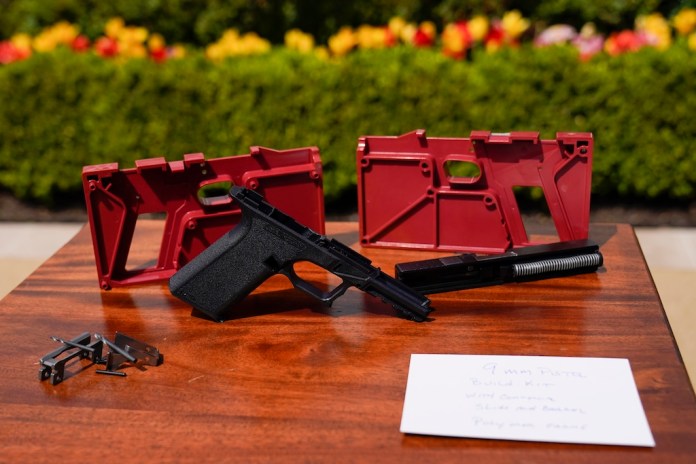
Read full story at Washington Examiner →Judge Reed O'Connor's ruling Tuesday dismantles what became one of the Biden administration's signature gun control initiatives. In April 2022, the ATF issued a rule classifying unfinished firearm frames and receivers—the legally regulated parts of a gun—as complete firearms themselves, requiring background checks and serialization even when sold as incomplete kits. The rule targeted "ghost guns," unserialized weapons assembled from parts purchased separately without federal tracking. O'Connor, sitting in federal court in Fort Worth, Texas, found the ATF lacked statutory authority to redefine what constitutes a firearm under existing law and that the rule violated the Administrative Procedure Act's procedural requirements.
The practical stakes are immediate and concrete. Gun manufacturers and dealers who built compliance infrastructure around the 2022 rule now face legal uncertainty about enforcement. More significantly, the ruling opens the door to unfettered sales of partially-completed receiver kits—polymer and metal frames that are functionally the hardest part of a gun to manufacture—to anyone without background checks. According to ATF data cited in court filings, roughly 45,000 ghost guns were recovered by law enforcement in 2021 alone. The administration had argued these weapons were specifically attractive to convicted felons and domestic abusers because the lack of serialization prevents tracing to purchasers.
This mirrors the structural conflict that reached the Supreme Court in 2022 with New York State Rifle & Pistol Association v. Bruen, where justices sided with gun rights advocates by limiting how courts could uphold gun regulations. O'Connor explicitly invoked that precedent, arguing the ATF's rule couldn't meet Bruen's test requiring regulations to have historical precedent in founding-era firearms law. The ghost gun rule had no such analog—there were no unfinished firearm kits in 1791. The Supreme Court's tilt on Second Amendment cases created a legal environment where even agency regulations face heightened skepticism.
The conservative case here is straightforward: the ATF invented a regulation rather than interpreting existing law. The 1968 Gun Control Act defines a firearm by its frame or receiver, but the Biden rule treated 80-percent-complete receivers as already-finished firearms based on the subjective term "readily convertible." That's executive overreach dressed as safety policy. Supporters of the ruling note the administration could have sought legislation from Congress if the existing statute was insufficient—instead it stretched agency authority and got caught. Separately, they argue the serialization regime was a backdoor gun registry, exactly what Second Amendment advocates have long feared.
Watch for two immediate developments. First, the ATF will likely appeal to the Fifth Circuit, which leans conservative but must confront O'Connor's statutory interpretation directly. Second, Congress could attempt to amend the Gun Control Act to explicitly define unfinished receivers as firearms, though that faces long odds with current House composition. The ruling doesn't invalidate existing prosecutions under the rule, but creates a freeze on new enforcement and opens a window for kit sellers to resume unrestricted sales. The decision comes as Republican attorneys general have already signaled they won't defend the regulation in appeals court.