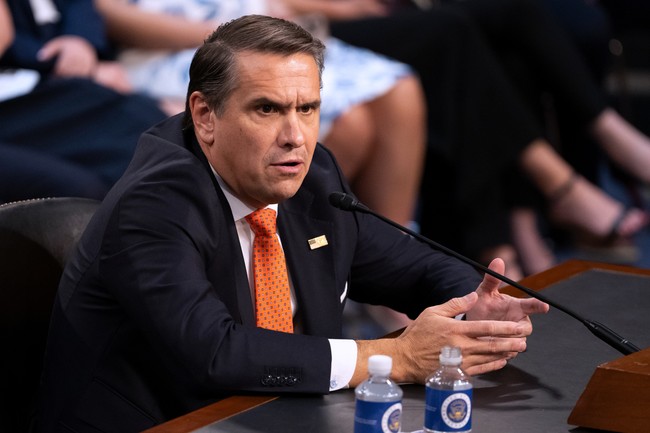
Todd Blanche Just Made a Huge Move for Gun Rights
Read full story at Townhall →# Why This Matters
Todd Blanche, Donald Trump's lead attorney, filed a federal lawsuit on January 15th challenging New York's ban on carrying concealed weapons in sensitive locations—a restriction that has stood since 2022 when the state passed it in response to the Supreme Court's Bruen decision. The suit names Governor Kathy Hochul and state officials directly, arguing that the "sensitive places" list is unconstitutionally vague and effectively nullifies Second Amendment rights in urban areas where most New Yorkers live. This isn't a theoretical case—New York's law currently prohibits firearms in subways, buses, parks, schools, and private businesses unless the owner explicitly opts in, which almost none do. Blanche's filing came weeks before Trump's inauguration, signaling that gun rights litigation will be a priority in the new administration's Department of Justice.
The practical stakes are straightforward: New Yorkers who legally own firearms have been locked out of carrying them in roughly 90 percent of the places they actually spend time. A construction worker licensed to carry can't bring his weapon on the subway to his job site. A woman with a concealed carry permit can't access it while shopping in Midtown. The sensitive places framework was designed as a compromise after the Supreme Court's June 2022 Bruen ruling struck down New York's previous "may-issue" licensing scheme—but states interpreted Bruen as permission to draw new perimeters rather than genuinely liberalize carry rights. New York's response was to wall off carrying almost entirely while technically preserving the license. Blanche's lawsuit targets exactly this shell game.
The historical comparison is the post-Heller era. After DC v. Heller in 2008 struck down DC's handgun ban, the city spent years in federal court defending increasingly creative restrictions that technically allowed guns but practically banned them. This lawsuit mirrors that pattern: it's the same legal argument (a right on paper means nothing if the state structures society to make it impossible to exercise) that ultimately forced DC to stop dragging its feet. Blanche is signaling that Trump's DOJ will not tolerate the "technically legal but functionally prohibited" approach blue states have settled into.
The populist read here is direct: New York passed a law designed to circumvent a Supreme Court ruling. The state's own governor called the Bruen decision a "catastrophe." Rather than accept the ruling, Democrats created a de facto gun ban by drawing a map so restrictive that carrying becomes theoretical. This is judicial defiance with a smile. Blanche's filing is saying the administration will sue states that do this. If you believe courts should mean what they say, and that laws passed explicitly to undermine court rulings are illegitimate, then this matters enormously.
The immediate benchmark is the district court response. Federal judges in Manhattan will decide whether to block the sensitive places restrictions while the case proceeds—a preliminary injunction would immediately expand where New Yorkers can carry legally. That ruling could come within weeks. After that comes the appellate track, which will likely reach the Second Circuit Court of Appeals within 18 months. If the Second Circuit upholds Blanche's arguments, New York faces a choice: comply or appeal to the Supreme Court, which has already shown willingness to overturn gun restrictions. The state is essentially on notice that its 2022 law will face sustained federal litigation through the Trump administration.
What separates this from prior gun rights cases is the institutional backing. Blanche isn't filing as an outside advocate—he's filing as Trump's personal attorney, with a president-elect who has signaled Second Amendment enforcement will be part of his DOJ's agenda. That changes the resources, the speed, and the political calculation for the defendant. New York's law survived two years in relative peace because the Biden administration's DOJ was unlikely to enforce Bruen aggressively. That protection is ending in 13 days.