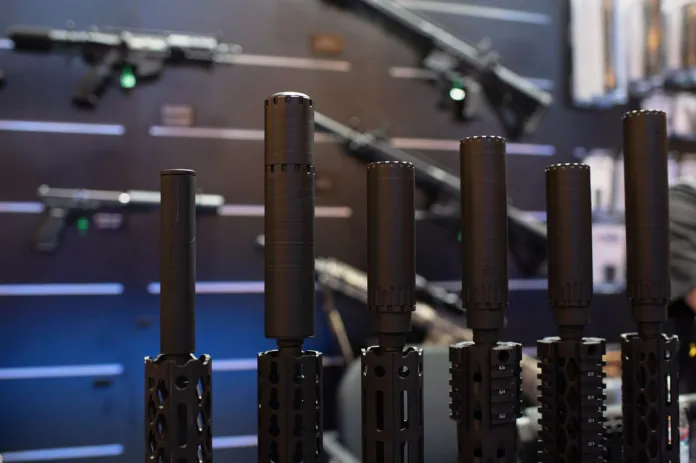
DOJ lets Texas gun ruling take effect, leaving Second Amendment activists hopeful and anxious
Read full story at Washington Examiner →# Why This Matters
Judge Reed O'Connor's ruling in Fort Worth federal court last month invalidated key parts of the National Firearms Act as applied to suppressors, short-barreled rifles, and short-barreled shotguns—a 1934 law that has survived decades of constitutional challenges. O'Connor found that the 80-year-old statute violated Second Amendment rights by requiring ATF approval, fingerprinting, photo documentation, and a $200 tax stamp for each item. By declining to seek an emergency stay, the Trump Justice Department effectively greenlit enforcement of a ruling that affects potentially millions of gun owners and creates the first major crack in federal firearms regulation since the NFA's passage. This isn't a symbolic victory; people can now legally manufacture and possess these items in the Western District of Texas without the registration apparatus—though the ruling's geographic scope and inevitable appeals create genuine uncertainty about whether the window stays open.
The practical stakes are immediate and concrete. A gun owner in Dallas can now manufacture a suppressor in their garage or buy one without ATF approval, something that would have meant federal felony charges six months ago. Ammunition manufacturers have already begun exploring how the ruling affects their interstate commerce. But the real tension is that O'Connor's ruling applies only to his specific district, meaning someone ten miles outside his jurisdiction is still subject to the NFA's full machinery. The suppressor industry—a roughly $400 million market—now faces the absurd prospect of operating under two legal regimes simultaneously. Gun owners outside Texas are watching to see if other federal judges follow O'Connor's reasoning, while the ATF is presumably already preparing paperwork for a Department of Justice appeal under the Biden-era litigation strategy that this administration has now abandoned.
The historical parallel is meaningful: this echoes the early trajectory of *District of Columbia v. Heller* in 2008, when the Supreme Court invalidated D.C.'s handgun ban but the ruling initially applied only to federal property, forcing years of subsequent litigation to establish Second Amendment protections as binding on states. O'Connor's ruling, like Heller, rests on individual right interpretation rather than militia-based reasoning. If appellate courts affirm, the NFA could face the same decades-long unraveling that followed Heller—a series of rulings narrowing what regulations survive constitutional scrutiny.
The conservative read is straightforward: the NFA was always an unconstitutional wealth tax on exercising a constitutional right, dressed up in 1934 bureaucratic language to avoid the commerce power issues of the era. A $200 tax in 1934 dollars was designed to price out working people; it's still prohibitive for many today. Requiring government permission slips for lawful self-defense equipment contradicts the plainest language of the Second Amendment. The Trump administration's refusal to fight O'Connor's ruling signals a willingness to let constitutional law develop through the courts rather than defend regulatory apparatus that can't survive genuine scrutiny. This is judicial accountability working.
What matters now is jurisdiction and speed. The Fifth Circuit will almost certainly hear an appeal, and it controls the law for Texas, Louisiana, and Mississippi—territory with millions of gun owners and a court that has shown skepticism of federal firearms regulations. If the Fifth Circuit affirms O'Connor even partially, the ruling's persuasive authority explodes across other circuits and district courts. Watch for whether Attorney General Pam Bond's DOJ files an appeal at all, and if it does, whether it contests O'Connor's Second Amendment analysis or tries to narrow the ruling on technical grounds. The deadline isn't months away—O'Connor's ruling is already in effect. The next real moment comes when either other judges cite O'Connor to strike down NFA provisions in their districts, or when the Fifth Circuit panel assignment determines whether his logic survives appellate review.