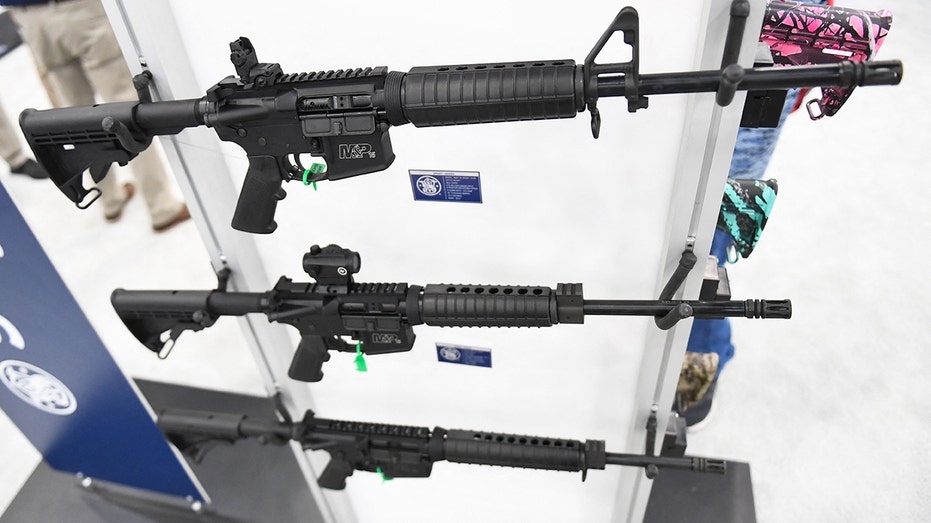
Gun rights gets 'greatest restoration' in 100 years with latest Trump DOJ move, lawmaker hails
Read full story at Fox News →The Trump Justice Department just terminated the National Firearms Act's $200 tax stamp requirement for suppressors and short-barreled rifles, a move that bypasses Congress entirely and effectively voids a 91-year-old federal tax that has functioned as a de facto prohibition on these items for ordinary Americans. The NFA, passed in 1934 during the Depression-era crackdown on gangsters, created a registration and taxation system modeled on alcohol excise taxes—the $200 fee was deliberately set high (equivalent to roughly $4,000 today) to price out common ownership. That tax has remained unchanged since 1934, meaning it became progressively more punitive over the decades as inflation eroded the purchasing power of ordinary citizens while the fee stayed flat.
The stakes are straightforward: roughly 2 million Americans currently hold registered NFA items, and manufacturers estimate another 2-3 million suppressors and short-barreled rifles exist in the unregistered aftermarket. The DOJ's action means future purchases require no federal registration, no tax payment, no waiting period—just compliance with state law. For gun manufacturers and the suppressor industry specifically, this opens a legal retail market that has existed almost entirely in the gray economy for decades. For gun owners, it means access to safety equipment (suppressors reduce hearing damage and recoil) without the bureaucratic friction and cost barrier. For anti-gun groups, it represents a direct threat to their data collection mechanism—the NFA registry was the closest thing to a de facto national gun registry Americans had.
The conservative argument here has real teeth: the $200 tax was always a backdoor ban. It was never about revenue (the tax raised almost nothing) and everyone from Franklin Roosevelt's attorney general onward has understood it as a prohibition through pricing. A working American in 1934 earning $1,500 annually couldn't spend $200 on a silencer any more than they could on a car. The mechanism was explicitly designed to make certain firearms inaccessible to the poor while remaining available to the wealthy and well-connected. Removing it simply restores equal access to a legal good—you can already own short-barreled rifles and suppressors in most states, you just had to pay a medieval tax first. The Second Amendment doesn't say "unless Congress prices it out of reach."
The historical parallel is the 1968 Gun Control Act, which did roughly the opposite: it created a federal licensing system for dealers that effectively marginalized the unregulated market and created federal gatekeeping authority. What happened after 1968 was not immediate—it took decades for the regulatory state to fully settle in. This NFA reversal operates on the same long timeline, but in reverse. Courts didn't force this; the executive did, reinterpreting its own enforcement authority. That creates an obvious vulnerability: a future DOJ can reverse it just as easily.
What happens next is almost certainly a lawsuit from gun control groups challenging whether the DOJ has the unilateral authority to void a tax Congress imposed. The mechanics matter here—the Trump DOJ is arguing that the NFA tax is inconsistent with the Second Amendment as clarified by *New York State Rifle & Pistol Association v. Bruen* (2022), the Supreme Court decision that dismantled the "means-ends" test and required historical grounding for gun restrictions. That argument will reach a federal court within weeks. If gun control groups win an injunction, the tax could be back in effect pending appeal. If Trump appointees hold the line, this becomes permanent until the Supreme Court or a future Congress reverses it. The actual deadline to watch: when the first suppressor manufacturer tries to sell without collecting the tax, and which U.S. attorney moves to enforce the old law. That confrontation will determine whether this is real or rhetorical.