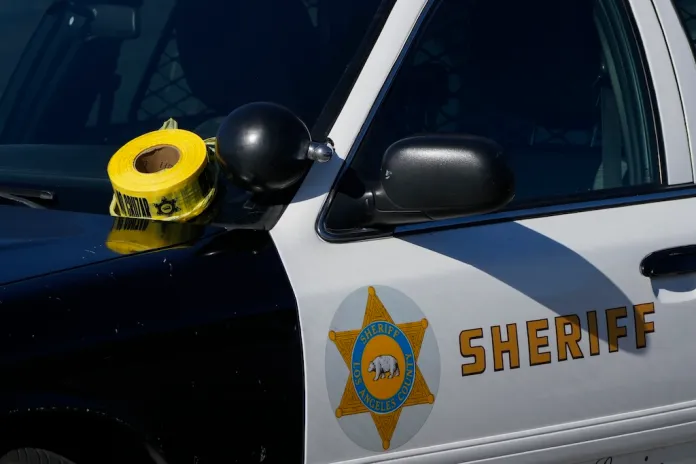
DOJ announces settlement with LA County Sheriff’s Department over ‘excessive’ concealed carry permit delays
Read full story at Washington Examiner →The Los Angeles County Sheriff's Department will overhaul how it processes concealed carry permits under a settlement announced by the DOJ on Thursday, marking a significant federal intervention into one of California's most restrictive permitting regimes. The DOJ sued LASD in September 2025, alleging the department systematically delayed applications—sometimes for years—effectively denying Second Amendment rights through bureaucratic attrition rather than explicit rejection. The settlement requires the LASD to establish a 90-day processing timeline for applications, implement written standards for approval and denial, and create an appeals process with independent review. Sheriff Robert Luna's department has been a bottleneck: as recently as 2024, LA County was issuing roughly 300 permits annually to a population of 10 million, making it one of the nation's most difficult jurisdictions to legally carry concealed.
The specific mechanics matter here because they expose how administrative delay functions as policy. Applicants who submitted permits in 2022 were still waiting in 2025—some never received a formal denial, just indefinite limbo. The DOJ documented that LASD provided no written application criteria, leaving applicants unable to understand why their application sat in a drawer or what would change their status. This is distinct from a jurisdiction that says "no" on principle; it's a jurisdiction that says "maybe" forever, which has the same chilling effect on constitutional exercise but looks less politically vulnerable. The settlement also requires LASD to issue permits to applicants who meet basic criteria—no criminal history, no restraining orders, completion of a training course—rather than relying on undefined "good cause" determinations that historically meant "we don't feel like it."
This resembles New York's permitting crisis before the Supreme Court intervened in *New York State Rifle & Pistol Association v. Bruen* (2022). That case struck down New York's "proper cause" standard, which granted judges discretion to deny permits based on vague criteria—a system that left New York City with roughly 8,000 active permits for 8 million residents. The parallel holds: both systems used bureaucratic gatekeeping to achieve near-prohibition without admitting it. Federal courts have now begun treating delay-as-denial as a constitutional violation, not a procedural inconvenience. The LA settlement suggests the DOJ intends to aggressively pursue similar cases across states with high-barrier permit systems.
The conservative argument here is straightforward: LA County had engineered a de facto ban on constitutional carry through administrative sabotage. The "excessive delays" framing is underselling it—we're talking about denying rights to hundreds of thousands of people by simply not processing applications. The DOJ lawsuit wasn't even necessary; LASD could have complied with existing law years ago. Instead, Sheriff Luna and his department chose to treat the Second Amendment as optional, betting that delays were too boring to trigger federal scrutiny. They lost that bet. This settlement is what happens when government agencies assume they can outlast constitutional protections through sheer bureaucratic inertia. California's permitting regime was the blueprint for how to ban something without banning it, and now that blueprint is failing in federal court.
The immediate trigger: LASD must submit a compliance plan to the DOJ within 60 days detailing how it will meet the 90-day processing standard. The agency will need to hire and train staff to handle the application backlog—estimates suggest thousands of pending applications exist. California's attorney general, Rob Bonta, previously defended LASD's permitting practices, so watch whether his office challenges the settlement or appeals if LASD struggles to comply. The second-order watch: similar DOJ lawsuits could target California's other restrictive counties (Alameda, Santa Clara) and potentially other states using delay-based de facto prohibition. Federal prosecutors have now flagged this as enforceable civil rights violation, not a local policy question.