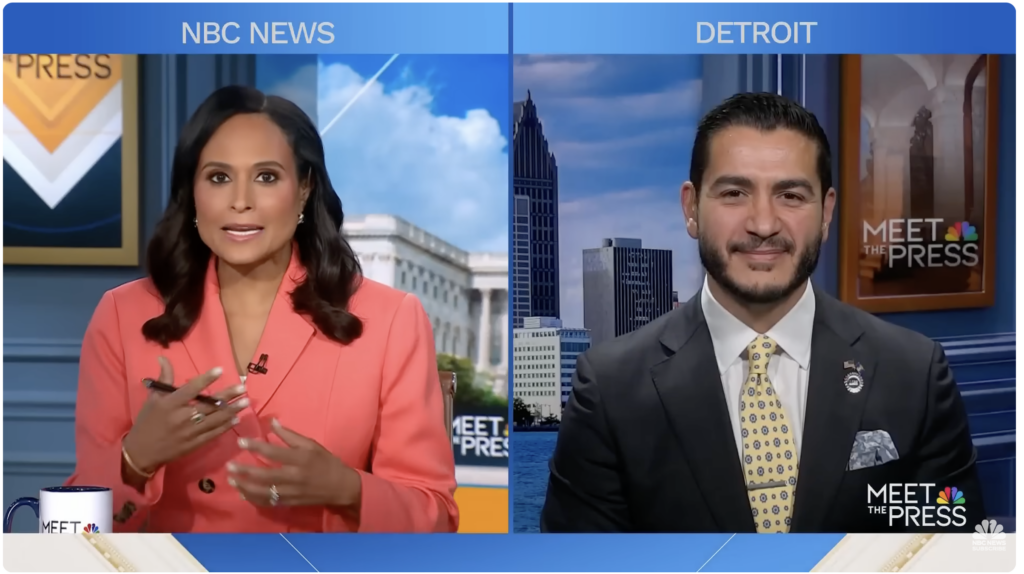
Podcast: Michigan Socialist Senate Candidate El-Sayed Wants To ‘Tweak’ The Second Amendment
Read full story at The Federalist →Abdul El-Sayed, the Democratic Michigan Senate candidate who lost his 2018 gubernatorial run and has since positioned himself as the state party's progressive standard-bearer, walked directly into a Second Amendment minefield during a December 2023 podcast appearance that his campaign has now scrubbed from circulation. The Nashville Covenant School shooting had just occurred—a shooter killed six people including three children at The Covenant School, an independent Christian elementary school in Tennessee—and El-Sayed used the platform to reframe the incident as fundamentally a gun access problem rather than a mental health or religious extremism issue. He used the phrase "tweak" the Second Amendment, language that in conservative circles reads as code for the regulatory overreach gun owners have fought for decades. The podcast episode vanished from digital platforms, but screenshots and audio clips survived—the digital equivalent of a campaign promise written in permanent marker.
Michigan's political geography makes this particularly toxic for a statewide Democrat. The state has gone purple-to-red in presidential contests and remains split on gun regulation. Trump won Michigan by 30,000 votes in 2016; Biden reclaimed it by 150,000 in 2020. Rural and exurban Michigan—the areas that tip statewide races—are populated by gun owners who view Second Amendment language with forensic precision. El-Sayed's 2018 gubernatorial loss saw him finish third in the Democratic primary despite name recognition, a reminder that Michigan Democrats haven't successfully nationalized gun control as a winning issue in statewide races. If El-Sayed clears the primary in the Senate race, this podcast will become a centerpiece of opposition research in the general election, particularly in counties where hunting and sport shooting are cultural fixtures.
The conservative read here is straightforward: this is what progressives actually believe when they think no one's listening. El-Sayed didn't misspeak or get ambushed by a bad-faith interviewer—he volunteered the characterization on a friendly platform. The deletions and scrubbing afterward reveal he understood the liability. Gun owners have watched this pattern repeat: Democratic politicians use tragedy as a springboard for constitutional modifications, then walk back the rhetoric when facing voters in swing territory. "Tweaking" the Second Amendment means magazine restrictions, licensing requirements, or ammunition taxes—measures that affect law-abiding gun owners while doing nothing to prevent criminals from obtaining weapons. The Covenant School shooter's specific weapon or method of acquisition isn't mentioned in El-Sayed's commentary, suggesting the proposal was ideologically driven rather than responsive to any particular policy gap. To Second Amendment advocates, this is exactly the kind of activist jurist thinking that leads to death by a thousand regulations.
Michigan's 2024 Senate race will determine control of a seat held by retiring Democrat Debbie Stabenow, meaning Republicans view this as a pickup opportunity. If El-Sayed wins the primary—he faces competition from U.S. Representative Elissa Slotkin and others—the podcast becomes the frame for every rural Michigan advertisement in the general election. Slotkin, who represents a competitive district and has walked the gun regulation line more carefully, already has the advantage of not having deleted controversial recordings about constitutional amendments. El-Sayed's campaign faces a cascading problem: the deletion itself became news, making suppression backfire into amplification. The next 60 days will determine whether Democratic primary voters prioritize ideological alignment with gun regulation or electability in a general election Trump is likely to win decisively.
Watch for El-Sayed's response when directly asked about the deleted podcast during primary debates or in media interviews. His answer will signal whether he's backing away from the "tweak" language or doubling down on it. A walk-back suggests political calculation; a restatement suggests genuine conviction. Either way, the recording itself—now distributed across conservative outlets—has a longer shelf life than any clarification. The Democratic primary vote is scheduled for August 2024, followed by the general election in November, giving Republicans four months to carpet-bomb any El-Sayed primary victory with the exact words he tried to erase.